
Why Upskilling Your Tech Team is the Smartest Business Move in 2026
Why Upskilling Your Tech Team is the Smartest Business Move in 2026 High attrition, rising salaries, and an ever-widening skills gap, these are the realities IT leaders are battling right now. Important projects stall because tech teams lack expertise in AI, cloud, cybersecurity, and data science. Recruitment pipelines are drying up, and even when new hires are secured, onboarding delays and inflated costs erode ROI. The challenge is pretty clear: hiring alone cannot solve the talent shortage. The pace of digital transformation is simply too fast, and external talent too scarce, to rely on recruitment as the primary strategy. This is where upskilling your tech teams becomes the smartest business move. By investing in IT workforce training and employee skill development, companies can bridge the gap internally, reduce dependency on external hires, and build a future-ready workforce that drives innovation. Let us take a closer look at what upskilling truly means for tech teams and how it differs from traditional hiring or reskilling. What Does Upskilling Mean for Tech Teams in IT Companies? Basically, upskilling refers to enhancing the existing skills of employees so they can meet evolving business and technology needs. Unlike hiring, which brings in new talent from outside, upskilling focuses on empowering your current workforce to stay competitive, agile, and aligned with the organizational goals. However, it is very important to distinguish upskilling from reskilling. Reskilling involves training employees to take on entirely new roles, often in different domains. Upskilling, on the other hand, is about deepening expertise in current roles or expanding into adjacent areas. For instance, a backend developer learning full-stack development is upskilling, while a project manager transitioning into data analytics is reskilling. Both are valuable, but upskilling is often the faster, more cost-effective way to fix immediate skill gaps. Why does this matter for IT tech teams? As the technology is evolving rapidly, the skills that were innovative three years ago may already be outdated today. Upskilling ensures that employees don’t just keep pace with change, but actively drive it. Through continuous learning, they become more versatile, confident, and capable of tackling complex challenges. Here are some common upskilling programs that directly impact IT performance: Most of the leading IT companies implement structured and industry-aligned training programs that focus on practical and real-world skills to build high-performing engineering teams. Some of the most valuable upskilling tracks include: Data Structures & Algorithms (DSA): This course strengthens technical problem-solving, improves code efficiency, and enhances architectural thinking that is critical for any engineering role. Full Stack Development: This program covers frontend frameworks, backend APIs, database design, and DevOps basics, enabling engineers to build quality driven scalable applications. Data Science & Machine Learning: This training equips IT teams with the ability to extract insights from data, build predictive models, automate workflows, and support AI-driven business initiatives. Agentforce Programs: This program is specifically designed for modern AI-enabled enterprise development, helping teams to build intelligent automation, workflows, and digital agents. Cloud, DevOps & Infrastructure Automation: This course includes Kubernetes, Docker, CI/CD pipelines, infrastructure as code, and cloud architecture. These skills are essential for building scalable and reliable systems. These tailored and structured programs create a workforce that is not only technically proficient but also strategically aligned with business goals. Now that we have defined what upskilling means, let us move on to why it is such a powerful business strategy and how it delivers measurable benefits. The Key Business Benefits of Upskilling Your Tech Teams Workforce Upskilling is more than a training initiative; it is a strategic investment that delivers measurable business impact. By prioritizing IT workforce training and employee skill development, companies can strengthen their skill set, reduce costs, and improve capabilities. Let us break down the essential benefits: Cost-Effective Alternative to Hiring Most importantly hiring new employees is expensive and often inefficient. Recruitment fees, onboarding processes, and salary premiums for niche skills can drain budgets quickly. In many cases, companies spend months searching for the right candidate and face project delivery delays. In contrast, training programs are extremely cost-effective. They enable software companies to maximize the potential of their existing workforce. Upskilling reduces dependency on external hires, improves ROI, and accelerates project readiness. Instead of paying high salaries for scarce talent, companies can invest in structured training programs that deliver immediate value. Boost Employee Retention and Satisfaction Today’s employees demand more than simply a paycheck; they want possibilities for advancement. When organizations invest in employee skill development, they send a clear message: “We value your future.” This fosters loyalty, engagement, and a sense of belonging. As a result, the companies that prioritize tech talent retention through upskilling often report higher employee satisfaction and positive workplace culture. Create a Future-Ready Workforce Emerging technologies like AI, automation, and blockchain are reshaping the IT landscape. Without continuous learning, teams risk falling behind. Upskilling ensures that your workforce is prepared for these shifts, equipping them with digital transformation skills that align with evolving business needs. Consequently, a future-ready workforce doesn’t just adapt; it leads. Employees trained in cutting-edge technologies can anticipate industry changes, innovate faster, and align their expertise with long-term organizational goals. Improve Project Delivery and Innovation Upskilled teams are more agile, collaborative, and productive. They can deliver projects faster, with fewer errors, and adapt to changing requirements with confidence. Upskilling also encourages cross-functional collaboration, as employees gain broader skill sets that allow them to contribute beyond their core roles. For example, companies like Google and Infosys have demonstrated how structured upskilling programs fuel innovation pipelines. By investing in the workforce, they have created cultures of continuous improvement where employees actively drive new ideas and solutions. This proves that investment in workforce development directly translates to business growth, improved project outcomes, and sustained innovation. Clearly, the benefits of upskilling extend far beyond cost savings; they touch every aspect of workforce performance and business sustainability. How Gradious Corporate Training Programs Empower IT Tech Teams in Software Companies To address the growing talent challenges in IT, Gradious offers specialized corporate upskilling and
How Companies Can Build Future-Ready Teams with Gradious Training Programs

How Companies Can Build Future-Ready Teams with Gradious Training Programs Future-Ready Workforce Training Imagine this, your latest dream project is suddenly put on hold. This is not due to lack of funding or vision, but rather your team lacks the essential skills to deliver it. Deadlines slip, clients grow impatient, and competitors move faster. This is the reality many IT leaders face today. The rapid rise of AI, cloud platforms, and data-driven systems has created a widening gap between what businesses demand and what employees can deliver. Traditional hiring alone cannot close this gap. It is quite expensive, slow, and rarely produces talent that is productive from day one. That is why Future-Ready Workforce Training is a game changer. IT companies can transform their existing employees into agile, adaptable, and innovation-ready via structured & outcome-driven training programs. Gradious helps organizations bridge the skill gaps with industry-optimized corporate training programs. Through this approach IT leaders can accelerate organizations’ productivity and build teams that thrive in the digital era. Why Building Future-Ready Workforce Training Matters for IT Companies The IT industry relies on speed, innovation, and precision. Yet technical competence alone no longer guarantees success. Clients now demand faster delivery, seamless integration, and solutions that predict potential challenges. In order to meet these demands, IT leaders must build future-ready teams that are not just skilled but also adaptable, collaborative, and aligned with business outcomes. Key Attributes of Future-Ready Workforce Training Adaptability: Future-ready teams adapt quickly when technologies or project requirements change. They don’t stall when a new framework emerges or a client shifts priorities; instead they adapt and keep going. Continuous Learning: These teams embrace learning as an integral part of their culture. Employees actively seek new knowledge, experiment with tools, and apply skills to real projects. Cross-Functional Skills: Future-ready teams break silos. Developers understand analytics, data engineers grasp business logic, and project managers speak the language of technology. This blend of skills drives innovation and efficiency. These qualities don’t develop by chance. They require deliberate investment in tech talent development and corporate upskilling programs that align employee growth with organizational goals. The Role of Emerging Technologies in Modern IT AI, Cloud Computing, and Data Science are no longer optional; they are the core pillars of today’s IT and digital transformation strategies. Every client now demands some level of automation, data intelligence, or scalable cloud-native infrastructure. As these technologies evolve, client expectations grow at the same pace. Without structured and continuous learning, teams quickly fall behind, making it harder for companies to stay competitive. An organization that cannot deliver AI-driven solutions or cloud-native deployments risks losing high-value projects to competitors who can. Why Continuous Upskilling Matters for Top IT Companies Continuous upskilling keeps employees relevant, productive, and future-ready. It empowers teams with the latest tools, frameworks, and best practices, while also fostering a strong learning culture. Employees who see clear opportunities for growth feel more motivated, loyal, and capable of delivering high-quality work. Companies that do not prioritize skill development often face stagnation, low morale, and higher turnover. What are the Potential Risks of Relying on Traditional Hiring Many IT leaders try to bridge skill gaps by hiring new talent. While it may seem like a quick fix, this approach is expensive, time-consuming, and inefficient. Recruitment cycles can take months, onboarding drains resources, and new employees still need time to ramp up before they contribute effectively. During this period, project timelines slip, and client satisfaction declines. In contrast, upskilling existing employees is faster, less expensive, and more sustainable. It strengthens loyalty and ensures teams are aligned with the company’s long-term vision. By building skills from within, organizations develop a workforce that grows with the business and consistently delivers exceptional results, rather than relying on external hiring. Key Challenges IT Companies Face in Workforce Development Many IT leaders understand the urgency for workforce development but often struggle to implement strategies that deliver practical and measurable results. The most common obstacles include: Skill Gaps New hires often have theoretical knowledge but lack hands-on experience. This slows delivery, increases reliance on senior staff, and creates project bottlenecks. High Recruitment & Onboarding Costs Hiring to fill skill gaps is expensive and slow. Long recruitment cycles, intensive onboarding, and delayed productivity impact timelines and client satisfaction. Retention Challenges Employees expect continuous learning. Without growth opportunities, they leave. resulting in high turnover, loss of institutional knowledge, and repeated rehiring efforts. Rapid Technology Evolution Tech evolves faster than traditional training models. Static programs cannot keep employees aligned with new tools, frameworks, and best practices, leading to outdated skills and reduced competitiveness. Limitations of Traditional Training Conventional training focuses on theory, not real-world application. Teams struggle to apply what they learn, causing stalled projects, lower productivity, and reduced confidence. How Gradious Training Programs Solve These Challenges Today’s IT challenges demand more than generic training or one-time workshops. Companies need targeted, outcome-driven learning programs that close skill gaps, boost productivity, and align employee growth with business goals. This is where Gradious creates real difference. Gradious Bootcamps High-intensity, hands-on programs that build job-ready skills from day one. These bootcamps emphasize real-world application: coding, cloud deployment, data engineering, DevOps, AI/ML, GenAI and more. Corporate Upskilling/reskilling Programs Fully customized training pathways designed around your business objectives, tech stack, and project timelines. Whether the focus is faster delivery, stronger client engagement, or adopting new technologies, Gradious tailors programs that directly drive business outcomes. Gradious LMS Solutions A comprehensive talent development suite: Screen, Interview, Upskill, and Labs that includes everything from recruiting to evaluation to continual learning. This integrated approach helps companies identify, onboard, and develop talent efficiently. What Sets Gradious Apart Real-World, project-based Learning Training based on genuine industrial circumstances guarantees that skills are practical and instantly relevant. Hands-On Mentorship Expert trainers give ongoing support, assisting staff in overcoming obstacles and building confidence. Continuous Skill Evaluation Regular assessments track progress, highlight gaps, and ensure accountability throughout the learning process. Always Updated With the Latest Tools Programs evolve alongside emerging technologies, keeping teams competitive and
Upskilling vs Hiring: What is More Cost-Effective for IT Companies?
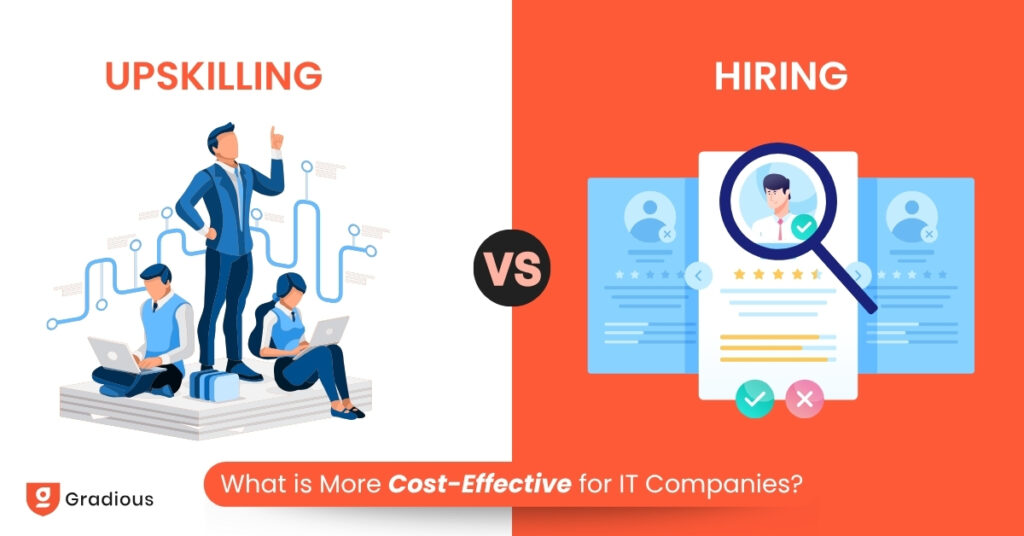
Upskilling vs Hiring: What is More Cost-Effective for IT Companies? Upskilling vs Hiring: Today’s IT companies face a new kind of pressure not from competition, but from capability gaps within their workforce. As AI, Cloud, and DevOps become core to every project, the widening skills gap directly impacts delivery timelines, innovation, and client satisfaction. For IT leaders, the question often boils down to upskilling vs hiring. Should they onboard new talent at a premium cost, or invest in developing their existing workforce who already understand their systems, clients, and culture through industry-ready training programs Hiring may offer quick availability, but true productivity often takes time and comes with higher turnover. Upskilling, on the other hand, accelerates workforce effectiveness, boosts retention, and builds lasting technical depth within teams.With structured, data-driven learning powered by platforms like Gradious Leap LMS, IT leaders can transform their existing workforce into highly skilled, project-ready teams — improving productivity and retention at scale. Upskilling vs Hiring in the IT Industry: What is the Key Difference? When IT leaders aim to scale or adopt emerging technologies, the default reaction is often to hire. But as project complexity and deadlines tighten, many are realizing that hiring alone can’t sustain competitiveness. Understanding the trade-offs between upskilling and hiring is key to making strategic decisions. What Does Hiring Mean for IT Companies? Hiring has long been the go-to method to fill skill gaps. On paper, it seems straightforward — recruit, onboard, and deploy. In reality, new hires often take three to six months to become fully productive, accumulating hidden costs such as recruiter fees, onboarding time, and team ramp-up efforts. Attrition risk worsens the challenge. If new hires leave within a year due to mismatched expectations, ROI drops significantly. For example, a mid-sized IT firm expanding its DevOps team may hire external engineers, but six months later, half the team is still adapting to internal processes. The result: capacity increases, but capability lags. Hiring solves immediate shortages but rarely builds sustainable technical depth. What Is Upskilling and Why Is It Becoming a Priority? Upskilling takes a proactive approach — developing existing employees who already align with company systems and culture. Through structured training, organizations can tie learning outcomes directly to project needs. The benefits are clear: Key Reasons Why Upskilling Has Become a Priority in the IT Industry Gradious Leap LMS strengthens this process by tracking every learner’s journey — from assignment completion and grading to automated evaluation, proctored assessments, and AI-driven interviews. This ensures every learner grows at the right pace while leaders gain real-time visibility into team readiness. The IT Reality: Why Hiring Costs More Than Upskilling Although hiring might seem like a quick solution in the upskilling vs hiring debate, its hidden costs often outweigh its benefits. Upskilling, on the other hand, compounds internal expertise with measurable ROI through corporate IT training solutions. The Hidden Costs of Hiring vs Upskilling the Workforce Hiring:Beyond salaries, organizations absorb recruiter fees, interview cycles, background checks, onboarding, and ramp-up time. Replacing an IT expert can cost 4–6x their annual salary, not including project delays or team disruptions. Upskilling:Training existing employees is significantly cheaper and faster. With Gradious Leap, organizations can automate performance tracking, run periodic assessments, and measure progress across cohorts — ensuring skill readiness aligns with project goals. Internal learning initiatives can improve productivity by 25–40% and reduce attrition by up to 50%, making upskilling a high-return strategy for IT organizations. Why Upskilling Outperforms Hiring for Long-Term Business Growth Upskilling is no longer just a training initiative; it’s a strategic driver of business growth. As technology evolves, companies with continuous learning cultures stay more agile, competitive, and future-ready. Developing a Continuous Learning Culture A continuous learning culture encourages curiosity and adaptability. Employees who are regularly upskilled can transition smoothly to new technologies or frameworks — boosting both innovation and delivery speed. Benefits include: Gradious Leap LMS supports this by enabling: Together, they ensure learning outcomes are consistent, measurable, and business-aligned. Data Insights – ROI Comparison of Upskilling vs Hiring in IT Companies When it comes to ROI, the numbers speak clearly. Using Gradious Leap’s analytics dashboard, companies can track skill improvement, performance insights, and project readiness in real time — converting learning data into actionable business intelligence. When to Choose Hiring Over Upskilling While upskilling offers long-term value, strategic hiring remains essential in certain cases — such as adopting emerging technologies like AI Agents, Quantum Computing, or Edge Analytics, or when internal teams are at full capacity. Most IT leaders today adopt a hybrid strategy — leveraging Gradious-led upskilling to strengthen core teams while hiring selectively for niche roles. This balance ensures agility, cost optimization, and sustainable competence. How Gradious Helps Enterprises Balance Upskilling vs Hiring At Gradious, we help IT enterprises close skill gaps and drive measurable business results through customized, scalable training powered by Gradious Leap LMS. Here’s how: By partnering with Gradious, IT companies can cut hiring costs by up to 70%, boost retention, and build future-ready teams that drive innovation. Conclusion In the end, upskilling isn’t just more cost-effective — it’s more sustainable. Hiring may fix short-term gaps, but it often leads to long-term inefficiencies. Upskilling builds internal strength, improves project quality, and delivers tangible ROI. With Gradious Leap LMS, IT leaders can directly link learning to performance outcomes — tracking progress, automating feedback, and empowering employees to grow faster. Start your workforce transformation journey with Gradious today — and turn learning into your competitive advantage. 📞 Talk to our team about building your internal upskilling program with Gradious Leap.” FAQs 1: What is the difference between upskilling and hiring? Upskilling enhances the skills of existing employees; hiring brings in external talent to fill gaps. 2: How does upskilling save money for IT companies? It eliminates recruitment and onboarding expenses while improving retention and time-to-productivity. 3: Is upskilling suitable for startups and enterprises alike? Yes. Startups gain multi-skilled teams at lower costs, while enterprises scale efficiently. 4: What’s the ROI of upskilling vs hiring for
How Companies Can Bridge the Skill Gap in IT with Industry-Ready Training
How Companies Can Bridge the Skill Gap in IT with Industry-Ready Training Did you know that over 70% of employers in the IT sector struggle to find skilled candidates, even though thousands of graduates enter the market every year? The problem isn’t the lack of talent — it’s the skill gap in IT that separates theoretical learning from real-world execution. From cloud deployments to DevOps pipelines, the expectations of modern IT roles evolve rapidly, while traditional training programs often lag behind. This results in companies investing in talent that still needs months of retraining. At Gradious, we understand that the real issue isn’t the lack of talent — it’s the lack of industry-ready training programs that prepare learners for real-world enterprise environments. Through our corporate IT training solutions, AI-powered coding labs, Gradious LMS, and workforce upskilling programs, we help organizations build job-ready teams faster and more effectively. Keep reading to explore why identifying and addressing the skill gap in IT is critical for your business — and how Gradious helps bridge it seamlessly. Understanding the Skill Gap in IT Hiring The skill gap in IT refers to the mismatch between the technical capabilities companies need and what employees or fresh graduates can deliver. It’s not about intelligence or intent — it’s about exposure and experience. While universities provide theoretical grounding, the industry demands practical, execution-level expertise. For example, graduates may understand what cloud computing is but not how to configure or secure a cloud environment. They may know how to code but not how to deploy applications efficiently in production. This widening gap is more than a hiring challenge; it is a business risk that impacts project timelines, quality, and innovation. Here’s why identifying the Skill Gap in IT matters so much to software companies: Methods to Identify the Skill Gap in IT Spotting skill gaps in IT isn’t always easy, but it becomes manageable with the right methods and data. Here are a few practical ways to uncover them: Strategies for Bridging Skill Gap in IT Bridging skill gaps in IT isn’t about quick workshops or annual training sessions — it’s about building a culture of continuous learning. Here’s what successful companies do differently: How Gradious Bridges the Skill Gap in IT through Industry-Ready Training Programs Traditional IT training programs often focus on concepts, not capability. At Gradious, we approach learning differently — by simulating the demands, complexity, and pace of real enterprise environments. Our industry-ready training programs blend AI-driven technology, expert mentorship, and hands-on project work, enabling learners to perform with the same confidence and discipline expected in the workplace. AI-Powered Learning Labs Many employees understand technology in theory but struggle to apply it in real-world scenarios. Gradious changes that with AI-Powered Learning Labs, immersive virtual workspaces that replicate software workplaces. Learners gain hands-on experience with cloud deployments, DevOps pipelines, automation tools, and real-time debugging. Our adaptive AI dynamically adjusts difficulty levels based on performance, introducing challenges that push learners beyond their comfort zones.For IT companies, this means shorter onboarding cycles and a workforce that is truly project-ready and productive from day one. Gradious LMS – Empowering Learning Through Insight and Automation The Gradious LMS (Learning Management System) plays a crucial role in ensuring effective learning outcomes and transparency across all training programs. Through automated assignment evaluation, grading, and structured feedback, the LMS provides learners with continuous improvement opportunities. Built-in AI-proctored assessments, unique project assignments, and mock interviews ensure authenticity and readiness.For mentors and managers, the LMS offers real-time progress tracking, performance analytics, and customizable reports. These insights make it easy to monitor learner engagement, identify knowledge gaps, and deliver tailored guidance. By integrating AI-based evaluation with human mentorship, Gradious LMS bridges the gap between training and measurable performance — ensuring every learner is both skilled and deployment-ready. Curriculum-to-Career Mapping Most IT training programs fail because they’re designed in isolation from real employer needs. Gradious bridges that gap through a unique Curriculum-to-Career Mapping framework. Each Gradious program aligns strategically with industry technologies and corporate tech stacks — including Cloud, Full Stack Development, AI/ML, and DevOps. Our team collaborates with IT partners to ensure that every module reflects real-world business use cases. Through continuous feedback loops with employers, the curriculum evolves alongside market demand — ensuring the skills learned today remain relevant for tomorrow’s roles. Skill Analytics Dashboard Traditional LMSs measure attendance and completion rates — Gradious focuses on impact. Our AI-driven Skill Analytics Dashboard provides real-time visibility into learner progress, identifying strengths, gaps, and behavioral learning patterns. For HR and L&D teams, this data translates into actionable insights that support talent planning, certification readiness, and workforce alignment.By turning learning data into performance intelligence, Gradious transforms training from a routine process into a strategic business driver. Mentor-Guided Learning At Gradious, every learner is supported by experienced industry mentors who provide continuous feedback, code reviews, and project evaluations. These mentors are practitioners who have delivered real-world enterprise solutions. This structured mentorship develops both technical expertise and professional discipline — ensuring learners not only understand technology but also apply it effectively within business contexts. How Gradious Empowers Companies with Corporate IT Training Solutions For many organizations, the challenge isn’t hiring talent — it’s helping that talent deliver faster. Gradious addresses this through corporate IT training solutions designed to build internal capabilities and future-proof enterprise teams. Key Offerings Include: By focusing on workforce upskilling in technology, Gradious helps IT companies turn their teams into their strongest competitive advantage. How Gradious Trains Fresh Graduates for Industry Needs Most graduates know theory — few understand real-world application. Gradious bridges this by preparing students in enterprise-aligned environments to make them job-ready from day one. Key Highlights: Companies hiring Gradious-trained graduates gain professionals who can contribute immediately. Benefits of Partnering with Gradious for Workforce Upskilling Partnering with Gradious gives IT organizations a measurable, long-term advantage: Conclusion To sum up, the skill gap in IT is no longer just an HR concern — it’s a business risk that slows innovation. Organizations relying on outdated training struggle
Skill Development Course to Accelerate Your Tech Career in 2025
Skill Development Course to Accelerate Your Tech Career in 2025 Enrolling in a skill development course is no longer optional—it’s essential. Remember when knowing basic coding or Excel was enough to land a tech job? Those days are long gone. In 2025, AI is writing code, automation is reshaping operations, and cloud computing runs nearly every modern business. These programs go beyond theory. They help learners master in-demand technologies like Artificial Intelligence, Data Analytics, Cybersecurity, and Cloud Engineering through practical, project-based learning. Whether you are a student, a fresher, or an experienced professional chasing your next career leap- focused skill development keeps you relevant, employable, and future-ready. Curious to know why upskilling has become the ultimate career strategy in 2025? Let’s explore that next. Why Skill Development Course Matters in 2025’s Tech Industry The tech world never stands still, and neither can you. We are currently at a period where job roles are blending and evolving faster than ever. Developers are expected to understand cloud infrastructure, data analysts are leveraging AI for predictive insights, and cybersecurity specialists are preparing for threats powered by automation. Ultimately, the notion of a “tech professional” has broadened, and with it, the expectations too. This is where skill development course make all the difference. It is more than just adding new skills to your resume; it’s also about developing the mindset that keeps you relevant. Simply put, learning is no longer a one-time milestone; it is an on-going investment in your career growth and security. Moreover, the future of learning is more dynamic, personalized, and technology-driven than ever before. In essence, the future belongs to those individuals who stay relevant with tech trends. Top Skill Development Course to Consider in 2025 Choosing the right upskilling programs for IT professionals can help you future-proof your career and gain a competitive edge. Here are the top courses shaping the job market in 2025—along with the tools, languages, and certifications that can accelerate your career growth. Artificial Intelligence & Machine Learning AI and ML continue to dominate the global tech market, transforming industries from healthcare to finance. Professionals skilled in automation, data modeling, and predictive analytics are highly sought for. Key Skills & Tools: Python, TensorFlow, Keras, Scikit-learn, NLP, and model deployment on cloud environments. Certification Paths: Why It Matters: AI-powered decision-making is now central to digital transformation strategies. Learning courses that focus on AI and ML helps you contribute to innovation-driven projects and stay ahead of automation trends. Cloud Computing & DevOps In 2025, almost every business runs on cloud and DevOps practices for quicker & efficient software delivery. For IT professionals, this is one of the best areas for upskilling and moving into high-paying, strategic roles. Key Skills & Tools: AWS, Microsoft Azure, Google Cloud, Terraform, Docker, Kubernetes, Jenkins, and CI/CD pipelines. Certification Paths: Why It Matters: Cloud adoption continues to surge across industries, making DevOps a vital skill set. Upskilling in these areas offers one of the fastest paths to leadership and career advancement. Cybersecurity & Ethical Hacking As the cyber threats are becoming more complex, cybersecurity has become a strategic business necessity. Enterprises are seeking skilled professionals who can predict, detect, and prevent security breaches. Key Skills & Tools: Network security, pentesting, OWASP, Metasploit, Wireshark, ethical hacking frameworks. Certification Paths: Why It Matters: Cyberattacks can cost organizations millions- and this has created an urgent need for trained experts. So, enrolling in professional development programs in cybersecurity provides hands-on defense skills. Full-Stack Development & Low-Code Platforms Modern organizations need agile developers who can handle both front-end and back-end operations or use low-code platforms to build applications quickly. This makes full-stack and low-code development a smart choice for freshers entering the IT industry. Key Skills & Tools: React, Node.js, MongoDB, Express.js (MERN Stack), HTML5, CSS3, REST APIs, and low-code platforms like OutSystems or Mendix. Certification Paths: Why It Matters: Full-stack developers are among the most versatile professionals in tech. Learning through structured skill development course, freshers can understand the full software lifecycle and build web applications easily. Data Analytics & Business Intelligence In 2025, data is the valuable asset. Organizations are looking for professionals who can analyze data, extract insights, and guide strategic decisions. Key Skills & Tools: SQL, Python, Power BI, Tableau, Excel, and predictive analytics. Certification Paths: Why It Matters: With data driving everything from marketing to finance, data certification courses in IT focused on analytics are among the most rewarding learning paths. Gradious Skill Development Course As the learning paradigm has shifted to personalization and practical mastery, Gradious takes the lead in empowering learners through industry-aligned programs. Our mentor-led professional development courses are designed to help both freshers and IT professionals upskill, reskill, and achieve sustainable career growth in technology in today’s evolving digital landscape. Software Development/ Full stack Development Gradious software development program trains learners to become full-stack developers ready for real-world projects. The program integrates front-end and back-end development, focusing on building and deploying functional applications. Learners gain practical experience and mentorship to confidently step into software engineering roles. Key Highlights: Infrastructure/DevOps The Infrastructure/DevOps program equips learners to design, deploy, and manage scalable cloud infrastructure. Students learn about automation, containerization, and CI/CD pipelines through hands-on activities. This program ensures learners can handle real enterprise-grade cloud environments with confidence. Key Highlights: Data Science Engineer The Data Science Engineer program focuses on equipping learners with practical skills to handle complex data workflows. From preprocessing to building predictive models, learners gain expertise to design intelligent systems. The program includes mentorship and capstone projects for real-world application. Key Highlights: AgentForce / AI & ML Gradious’s AgentForce program trains learners to develop AI-powered agents that solve real business challenges. The program covers the complete AI lifecycle from analysis and model building to deployment and monitoring. Learners will also get to work on projects to ensure that AI solutions are scalable, secure, and practical. Key Highlights Data Structures & Algorithms (DSA) The DSA program focuses on building a strong foundation in problem-solving and coding skills essential
Navigating the AI Landscape in 2025: Skills That Employers Demand
Navigating the AI Landscape in 2025: Skills That Employers Demand Artificial Intelligence (AI) is no longer a futuristic idea; it is now a driving force behind innovation across AI-driven industries. From finance and healthcare to retail and logistics, organizations are actively rethinking operations and strategies with AI at the core. As we step into 2025, the demand for AI skills in 2025 is accelerating, reshaping what employers look for in talent. For professionals and students alike, understanding these shifts is key to thriving in an AI job market trend that rewards adaptability and expertise. The Evolving AI Landscape in 2025: AI Skills in 2025 The future of artificial intelligence in 2025 is defined by widespread adoption and practical application. Businesses are shifting from pilots to large-scale AI deployments. Generative AI tools are becoming workplace staples, AI agents are assisting in customer service and operations, and automation is redefining repetitive roles. This means employers are seeking professionals who can both harness the power of AI and ensure its responsible use. Why AI Skills in 2025 Matter to Employers Today Employers are focused on two things: efficiency and innovation. AI promises both, but only if organizations have people who can implement it effectively. Skilled professionals help businesses: In short, AI skills in 2025 aren’t just technical assets; they’re strategic enablers of business growth. Core Technical AI Skills in 2025 Employers Demand Machine Learning & Deep Learning These remain the backbone of AI development. Employers need professionals who can build predictive models, train neural networks, and fine-tune algorithms for complex tasks. Natural Language Processing (NLP) With the rise of chatbots, voice assistants, and AI-driven communication, NLP has become a high-demand skill. Understanding how to work with text and speech data is vital in industries like healthcare, customer support, and education. Data Science & Analytics AI runs on data. Skills in cleaning, analyzing, and interpreting data ensure organizations can derive actionable insights and forecast trends with accuracy. Computer Vision From quality checks in manufacturing to medical imaging, computer vision applications are expanding rapidly. Employers are looking for talent that can design models to interpret and analyze visual data. AI-Powered Automation & Robotics The blend of AI and robotics is redefining industries such as logistics, automotive, and healthcare. Knowledge of AI-driven automation workflows can help professionals streamline operations at scale. Prompt Engineering & AI Agents The rise of generative AI tools has created demand for “prompt engineers” who can effectively interact with models and design AI agents for business tasks. Crafting the right prompts is becoming a skill of its own. Generative AI Tools Tools like ChatGPT, MidJourney, and Copilot are not just novelties; they’re integral to workplace productivity. Employers want individuals who can use these tools for creativity, prototyping, and workflow optimization. Programming & Data Skills Python, R, SQL, TensorFlow, and PyTorch remain foundational. Strong programming and data management expertise are non-negotiable for building and deploying AI solutions. Essential Non-Technical Skills for AI Careers: AI Skills in 2025 Critical Thinking & Problem-Solving The value of AI depends on the relevance of the problems it is applied to. Employers value professionals who can analyze situations, identify challenges, and align AI tools with business goals. Ethics in AI & Responsible Innovation Bias, fairness, and accountability are pressing concerns. Organizations want talent that understands the societal impact of AI and can guide its responsible use. Cross-Functional Collaboration AI projects rarely exist in silos. Professionals must work with diverse teams, from engineers to marketing, to ensure successful implementation. Adaptability & Continuous Learning The AI field evolves rapidly. Employers seek individuals who can continuously learn, upskill, and stay ahead of technological shifts through AI learning and development. AI Communication Skills Explaining AI concepts to non-technical stakeholders is critical. Those who can bridge the technical-business gap gain a significant edge in the workplace. Emerging AI Roles in 2025 As AI adoption grows, new job titles are becoming mainstream: These AI career opportunities reflect the diverse directions professionals can explore. How to Stay Ahead of the Curve To thrive in the AI job market trends of 2025, professionals should: Conclusion The AI skills in 2025 landscape is dynamic, demanding, and full of opportunity. Employers are looking for professionals who combine deep technical expertise with critical soft skills, ethical awareness, and adaptability. For those willing to invest in continuous learning and embrace both technical and non-technical competencies, AI careers will remain some of the most rewarding in the job market. Now is the time to build the right skill mix — not just to keep up, but to lead in the future of artificial intelligence.Become an AI innovator with Gradious.
Data Science Bootcamps vs. Traditional Degree Programs: Which is Right for You?
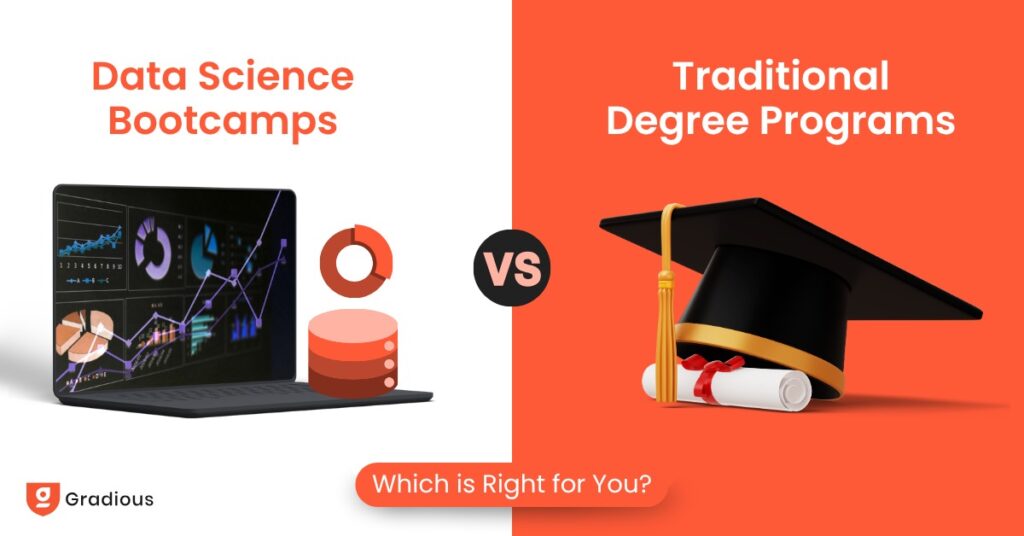
Data science bootcamp programs are transforming how aspiring data scientists enter the field, offering faster, practical alternatives to traditional degree paths. If you’re planning to enter this field, you will find yourself facing a key decision: Should you enroll in a full time university degree or take a fast paced data science bootcamp? This blog explores the differences between the two to help you make the right decision based on your goals, budget, and learning style. What Is a Data Science Bootcamp? A Data Science Bootcamp is a short, focused Data Science training program that teaches you the hands-on skills you need to get a job in the field, often in just a few months. Typical Features: Advantages of Data Science Bootcamp: Disadvantages of Data Science Bootcamp: What Is a Traditional Degree Program in Data Science? A traditional Data Science program is typically a Bachelor’s or Master’s degree that lays a theoretical and academic foundation in data science. Typical Features: Advantages of Traditional Degree Program: Disadvantages of Traditional Degree Program: Key Differences at a Glance Feature Bootcamp Traditional Degree Time Commitment Fast-paced, 3-6 months Comprehensive Years, 2-4 years Cost Moderate, ₹40,000 approx. High, ₹2-3 lakh approx. Curriculum Focus Prioritizes Job Ready Skills Builds a deep Theoretical Foundation Entry Requirements Skills based assessment Strict academic criteria Job Readiness Immediate & Targeted Requires practical application Networking Opportunities Smaller but more focused,Industry and hiring partners Larger academic & alumni base Which One Should You Choose? Choose a Bootcamp if: Choose a Traditional Degree if: What Employers Think More and more companies are embracing bootcamp graduates especially those who can show real world projects and portfolio work. However some traditional organizations still prefer the credibility of a formal degree. Your ability to demonstrate skills and problem solving ability will ultimately carry more weight than your credentials alone. Conclusion Ultimately, the right choice is the one that best fits your career vision.The optimal path into data science depends on your personal timeline, budget and career goals.Whether you choose an accelerated bootcamp or a comprehensive degree, prioritize programs that offer robust mentorship, hands on projects, and dedicated career support to ensure a successful transition into the field. Looking to break into data science fast? A project driven bootcamp might be your launchpad.Want a deeper academic dive? A traditional program could be the right path.At Gradious, we turn your curiosity into a career of actionable insights for your Data Science career.
From Zero to Hero: How to Become a Full Stack Developer in Less Than a Year

Becoming a full-stack developer is a highly sought-after career goal in today’s tech-driven world. With the right guidance and a structured approach, you can transform from a complete beginner to a proficient full-stack developer in less than a year. This article provides a step-by-step guide on mastering full-stack development, an overview of what to expect in a full stack developer course, and insights into potential career paths. Step-by-Step Guide to Mastering Full Stack Developer Becoming a Full Stack Developer in less than a year is achievable with the right approach. Stay consistent, build web development projects, and never stop learning. You’ll go from Zero to Hero by following these steps. Understand the Basics of Web Development Dive into Front-End Development Explore Back-End Development Integrate Front-End and Back-End Keep Learning and Adapting Overview of the Full Stack Developer JS Course Curriculum A comprehensive full stack JS course typically covers the following topics: 1. Introduction to JavaScript and Programming Basics 2. Front-End Development 3. Back-End Development with Node.js 4. APIs and Web Services 5. Authentication and Security 6. Deployment and DevOps 7. Capstone Project Career Paths for Full Stack Developer 1. Web Developer Work on creating and maintaining websites or web applications for various clients or companies. 2. Software Engineer Design, develop, and maintain software applications, often working in a more extensive engineering team. 3. Front-End/Back-End Developer Specialize in either front-end or back-end development, focusing on specific aspects of the application. 4. Full-Stack Consultant Provide expert advice on best practices, technology choices, and architecture for various projects. 5. Freelance Developer Offer development services on a freelance basis, allowing for flexible work and a variety of projects. 6. Tech Start-Up Founder Leverage your full-stack skills to build and launch your own tech start-up or product. Becoming a full stack developer in less than a year is an ambitious but achievable goal. By following a structured learning path, leveraging comprehensive course curriculums, and exploring diverse career opportunities, you can equip yourself with the skills needed to thrive in the tech industry. Embrace the learning journey, stay motivated, and continuously seek opportunities to apply and refine your skills. With dedication and effort, you’ll be well on your way to becoming a successful full-stack developer. Gradious Technologies is an innovative IT education provider focused on equipping students with practical, industry-relevant skills. Offering specialized courses in Full Stack Development, Machine Learning & AI, DevOps, and more, Gradious ensures learners are job-ready through hands-on experience and expert-led instruction. With a strong emphasis on real-world applications and mentorship, Gradious prepares individuals to excel in the fast-evolving tech landscape, making it the ideal choice for those looking to start, switch, or advance their careers in technology.
Why DevOps Future of IT Infrastructure
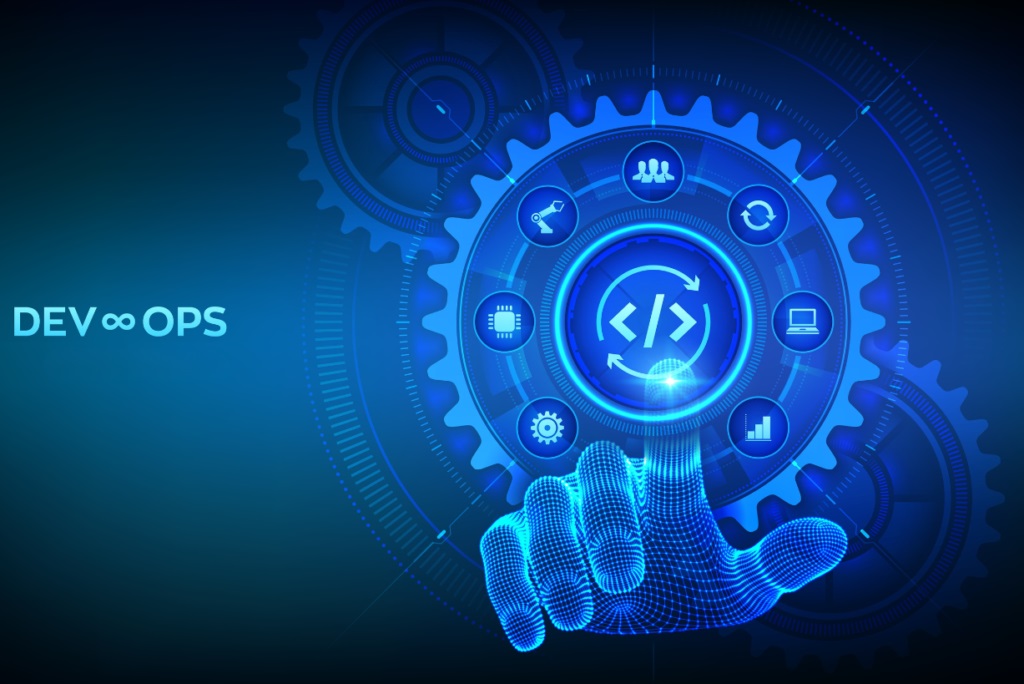
In the rapidly evolving world of IT, staying ahead of the curve is crucial. As organizations strive to enhance efficiency, improve collaboration, and deliver value faster, DevOps has emerged as a transformative force. But what exactly is DevOps, and why is it considered the DevOps Future IT Infrastructure? In this article, we’ll dive into the DevOps methodology, explore how it’s revolutionizing IT infrastructure and operations, and provide insights into how you can leverage this movement for your career, especially with DevOps market growth. What is DevOps? DevOps is a methodology that combines software development (Dev) and IT operations (Ops) to shorten the development lifecycle and deliver high-quality software continuously. It emphasizes collaboration between development and operations teams, breaking down traditional silos to foster a culture of shared responsibility, continuous feedback, and automation. At its core, DevOps is about creating a seamless workflow where code is developed, tested, and deployed more efficiently. This approach not only accelerates the pace of innovation but also ensures that software is reliable, scalable, and secure from the outset. Automation with DevOps automation tools plays a key role here. Transforming DevOps Future IT Infrastructure and Operations The impact of DevOps on IT infrastructure and operations cannot be overstated. Traditional IT practices often involve lengthy processes, manual configurations, and a clear division between development and operations teams. This siloed approach led to inefficiencies, slow release cycles, and frequent miscommunication. Future of DevOps flips this script by promoting automation, continuous integration, and continuous deployment (CI/CD), and a strong emphasis on monitoring and feedback. Here’s how DevOps is transforming IT infrastructure Automation: DevOps encourages the automation of repetitive tasks, such as code testing, deployment, and infrastructure provisioning. This reduces the likelihood of human error and frees up teams to focus on more strategic work. Continuous Integration/Continuous Deployment (CI/CD): By integrating code changes frequently and deploying them automatically, DevOps ensures that new features and updates are delivered rapidly and reliably. This leads to shorter development cycles and quicker time-to-market. Infrastructure as Code (IaC): DevOps introduces the concept of Infrastructure as Code, where infrastructure is managed and provisioned through code, allowing for more consistent, repeatable, and scalable environments. Enhanced Collaboration: DevOps fosters a culture of collaboration and shared responsibility between development, operations, and other stakeholders. This leads to better communication, quicker issue resolution, and a more agile approach to problem-solving. Insights into the Infrastructure/DevOps Course and Career Prospects As DevOps continues to shape DevOps Future IT Infrastructure, there’s a growing demand for professionals who are well-versed in this methodology. Our Infrastructure/DevOps course is designed to equip you with the skills and knowledge needed to thrive in this dynamic field. The course covers key DevOps practices such as CI/CD pipelines, IaC, containerization with Docker, orchestration with Kubernetes, and cloud infrastructure management. You’ll learn how to implement these practices in real-world scenarios, giving you a competitive edge in DevOps career prospects. Career Prospects: With DevOps being adopted by organizations across industries, the career opportunities are vast. Roles like DevOps Engineer, Infrastructure Engineer, and Cloud Architect are in high demand, offering lucrative salaries and the chance to work on cutting-edge technologies. By mastering DevOps, you’re not just preparing for a job — you’re positioning yourself at the forefront of IT innovation. The strong trend of DevOps market growth supports this demand. Conclusion DevOps is more than just a buzzword — it’s the DevOps Future IT Infrastructure. By embracing this methodology, organizations can achieve greater agility, faster delivery, and more reliable systems. For individuals, learning DevOps opens doors to exciting career opportunities in a field that’s reshaping the IT landscape. Whether you’re just starting or looking to upskill, our Infrastructure/DevOps course provides the knowledge and hands-on experience needed to succeed in this transformative domain. At Gradious Technologies, we’re at the forefront of this transformation, offering innovative solutions that blend industry expertise with cutting-edge technology. Our focus on integrating DevOps principles helps businesses streamline their IT operations and drive growth. Whether you’re looking to enhance your DevOps skills or seeking a partner to optimize your IT infrastructure.
Beyond Training: Building Meaningful Connections Between Talent and Tech Employers

Have you seen it countless times – bright, talented graduates struggling to land their first tech job despite years of education, highlighting the growing skills gap? Meanwhile, companies spend months training new hires before they become productive team members. After years of working at this intersection, we created Gradious to address this fundamental disconnect between academic training and industry needs. The Reality We Are Facing Together: Skills Gap Let us be straightforward about what is happening: traditional education excels at teaching theory but often falls short on practical application. When we talk to hiring managers, we hear the same story: “We interview candidates with impressive degrees who freeze when faced with real-world problems.” We completely understand students’ frustration. Many tell us, “I spent four years studying computer science, but companies still say I don’t have the ‘right experience.’” This catch-22 traps talented individuals in career limbo while positions remain unfilled, creating a wider skills gap in technology jobs. Gradious’s Approach to Bridging the Skills Gap Our Approach: Building Meaningful Connections At Gradious, we have rejected the idea that this broken system is inevitable. Instead, we’ve built a comprehensive ecosystem that serves everyone involved in the talent pipeline, creating a genuine pathway between education and employment. We cater to three audiences: Colleges, Students, and Corporations. 1. For Aspiring Tech Professionals If you have realized that classroom knowledge alone will not secure your dream job, we have designed learning modules specifically for you. Our approach includes: We don’t believe in passive learning. When you work with us, you’ll apply concepts repeatedly with personalized guidance until these employability skills become second nature. This ensures graduates transform into job-ready graduates who stand out in competitive tech career pathways. 2. For Forward-Thinking Companies Imagine cutting your new hire onboarding time in half. We have Corporate Training Programs that enhance your work experience with the new hire. We partner with businesses to: The Gradious hired fresher training programs graduates have contributed meaningfully to projects within weeks, not months. That’s a game-changer for the Corporates. 3. For Educational Institutions We understand the pressure colleges face to improve placement statistics, particularly those outside the top NIRF rankings. That’s why we’ve developed practical solutions: Since implementing these programs, we’ve seen partner colleges improve their placement rates by up to 35%, attracting companies that hadn’t recruited from these campuses in years. Why Choose Gradious? Having worked with thousands of students and dozens of companies, we’ve refined our methodology to focus on what works: The results speak for themselves – many graduates from our programs demonstrate skills equivalent to those with a full year of professional experience, becoming true industry-ready talent. Contributing to India’s Tech Future Shaping India’s Technological Future While we celebrate each success, our vision extends beyond individual achievements. By mindfully nurturing industry-ready talent, we’re tackling a vital challenge that impacts the nation’s future. Taking the Next Step Students: Don’t wait until your final semester to become industry-ready. The best time to start building practical skills is now – connect with Gradious and begin your transformation. Companies: Break the cycle of extensive onboarding and training. Imagine having access to professionals who can contribute meaningfully from day one. Educational Institutions: Partner with Gradious to establish a Centre of Excellence that guides your students toward successful career paths and elevates your institution’s reputation. The skills gap in technology jobs might seem overwhelming, but the solution starts with a simple step: reaching out to Gradious today to join a movement focused on meaningful skills development that benefits individuals, industries, and India’s technological future. Engage with us → What is your experience with the skills gap in technology jobs? We would love to hear your thoughts in the comments below.
