
Resume Tips 2026: How to Create a Job-Winning Resume

Resume Tips That Will Get You Hired in 2026 Resume Tips 2026 are essential for anyone looking to succeed in today’s competitive job market. A strong resume can determine whether you get shortlisted or overlooked, especially as recruiters increasingly rely on AI-powered recruitment platforms and Applicant Tracking Systems (ATS) to filter applications before conducting manual reviews. Whether you are a fresher, student, or experienced professional, understanding how to create a professional, ATS-friendly resume can significantly improve your resume visibility and increase your chances of receiving interview calls. By following the latest resume strategies, optimizing keywords, and presenting your skills clearly, you can stand out from other candidates and make a Why Resume Tips 2026 Matter More Than Ever Hiring practices have evolved significantly over the last few years. Organizations now receive a much larger number of applications for each role, while AI in business operations and intelligent recruitment systems are becoming more common across industries. Rise of ATS (Applicant Tracking Systems) Most companies use ATS software to scan resumes for relevant keywords, technical skills, certifications, and work experience before recruiters review them manually. An ATS-friendly resume improves your chances of clearing the initial screening process. ATS systems commonly evaluate: Industry reports consistently show that many resumes are filtered out during ATS screening due to poor formatting or missing keywords. Increased Competition Remote work opportunities and online job portals have increased global competition for jobs. Recruiters often receive hundreds of applications for a single opening, especially in technology, AI, cloud computing, and enterprise digital transformation roles.This makes your resume one of the most important assets in your job search. AI-Based Hiring Many organizations now use AI-driven hiring tools and intelligent automation platforms to evaluate: As a result, modern resume writing strategies now focus heavily on ATS optimization, practical skills, and measurable achievements. Resume Tips 2026: Choose the Right Resume Format Choosing the right resume structure is one of the most important steps in creating a professional resume in 2026. 1) Chronological Resume This format lists work experience from the most recent role to earlier positions. It is best suited for: Advantages: 2) Functional Resume This format focuses more on skills and competencies instead of work history. It is suitable for: Advantages: 3) Hybrid Resume A hybrid resume combines skills and work experience into a balanced structure. It works well for: Advantages: Suitable for AI-driven hiring systems Resume Tips 2026: Key Sections Every Resume Must Have Professional resumes should be concise, relevant, and easy to scan. These are the essential sections every resume should include. Professional Summary Your professional summary creates the first impression and should clearly communicate your value. Example:“Motivated software developer with strong problem-solving skills and experience in Python, JavaScript, cloud technologies, and scalable application development.” Keep it: Skills Section Your skills section should include: Use keywords naturally from the job description to improve ATS performance and resume relevance.Before creating your resume, explore this step-by-step roadmap for tech careers to align your skills with the right opportunities. Work Experience Clearly mention: Use bullet points instead of lengthy paragraphs. Examples: Automated reporting workflows to improve operational efficiency Education Include: Freshers can also include: Resume Tips 2026: Optimize for ATS (Applicant Tracking Systems) Building an ATS-friendly resume is one of the most important job-winning resume strategies in 2026. Use Relevant Keywords Recruiters and ATS platforms search resumes using keywords related to: If a job description includes terms such as: Include those keywords naturally throughout your resume where relevant. Avoid Complex Formatting ATS systems may struggle to interpret: Instead, use: Use Standard Headings Always use standard headings such as: This improves ATS readability and recruiter experience. Resume Tips 2026: Skills That Make Your Resume Stand Out Employers increasingly prioritize practical, business-relevant skills over degrees alone. Technical Skills Some of the most in-demand technical skills include: Soft Skills Recruiters also value professionals with strong communication and collaboration abilities. Important soft skills include: AI & Digital Skills AI adoption is expanding across industries, making digital and automation-related skills increasingly valuable. Important digital skills include: Strengthen your profile by learning in-demand technical skills here:Learning Programming Basics Resume Tips 2026 : Common Mistakes to Avoid Even highly qualified candidates lose opportunities because of avoidable resume mistakes. Spelling and Grammar Errors Small mistakes can create a poor first impression. Always: Too Much Information Recruiters prefer concise and focused resumes. Avoid: Keep your resume targeted and role-specific. Lack of Keywords Without relevant keywords, ATS systems may not rank your resume effectively. Carefully review the job description and naturally incorporate important keywords throughout your resume. Resume Tips 2026: Pro Tips to Get Hired Faster These strategies can improve your chances of getting shortlisted more quickly. Customize Your Resume for Each Job Avoid sending the same resume for every application. Instead: Use Action Verbs Strong action verbs make your resume more impactful. Examples: Add Measurable Achievements Quantifiable results help recruiters understand your contributions more clearly. Examples: Boost your resume further with industry-recognized certifications:Best Tech Certifications for High-Paying Jobs Want to Create a Resume That Gets You Hired in 2026? Start building in-demand skills, optimize your resume for ATS systems, and focus on measurable achievements that employers value.A well-structured and ATS-optimized resume can help you unlock better opportunities, improve interview selection rates, and support long-term career growth in 2026. Conclusion Following the right resume tips in 2026 can significantly improve your chances of getting hired in a competitive job market. Recruiters and AI-driven hiring systems increasingly prioritize resumes that are: Focus on: Whether you are a fresher or an experienced professional, investing time in creating a strong and professional resume can make a meaningful difference in your career growth and job search success. FAQs 1. What are the best resume tips for 2026? The best resume tips include using an ATS-friendly format, adding relevant keywords, highlighting measurable achievements, and customizing your resume for each job application. 2. How do I make my resume stand out? Use a strong professional summary, showcase measurable achievements, include in-demand technical and soft skills, and maintain
Will AI Replace Software Engineers in 2026? The Truth Every Student Must Know
Will AI Replace Software Engineers in 2026? The Truth Every Student Must Know Writing code, building websites, fixing bugs, developing apps, and automating workflows — AI tools can now assist with many of these tasks faster than ever before. With the rapid evolution of artificial intelligence, students and aspiring developers are asking one major question: Will AI replace software engineers in 2026? With tools like OpenAI ChatGPT and GitHub Copilot becoming increasingly powerful, concerns about software engineering jobs are growing rapidly. Many students now wonder whether learning programming is still worth it or whether coding careers will eventually disappear. However, the reality is far different from the fear-driven discussions often seen online. AI is not eliminating software engineering careers. Instead, it is transforming how developers work, accelerating intelligent automation, improving enterprise productivity, and reshaping AI in business operations. So, is AI truly replacing software engineers, or is it creating a new future for tech careers? Let’s understand the reality behind the hype. Will AI Replace Software Engineers 2026 – Understanding the Hype The concern about AI replacing software engineers did not emerge overnight. Over the last few years, AI-powered development tools have advanced at an extraordinary pace. Today, AI can: This rapid progress has naturally created uncertainty among students, freshers, and even experienced developers entering or working in the tech industry. Why AI Is Creating Fear in the Tech Industry Many viral videos online show AI creating applications within minutes. At the same time, headlines around automation, layoffs, and enterprise AI adoption have increased anxiety across the industry. Organizations are increasingly using AI-powered tools to improve operational efficiency, reduce repetitive work, and accelerate software delivery cycles. This has led many people to assume that software engineering jobs may eventually disappear. However, there is a major difference between automating repetitive tasks and replacing entire careers. Understanding that distinction is extremely important. The Rise of AI Coding Tools AI-powered development tools are significantly transforming modern software engineering workflows. Popular tools include: These platforms help developers: This is where the discussion about AI’s impact on software development becomes relevant. AI is undoubtedly improving productivity, but productivity is not the same as replacement. Automation vs Augmentation AI performs best when handling repetitive, predictable, and pattern-based tasks such as: However, software engineering involves far more than writing lines of code. Real-world software development requires: AI augments developers. It does not fully replace them. What AI Can Do in Software Development AI is already making software development faster and more efficient. Developers who understand AI-assisted workflows can significantly improve their productivity and efficiency. Code Generation & Debugging AI can generate code snippets within seconds. Developers now use AI for: Instead of spending hours searching forums or documentation, developers can now solve many issues more efficiently using AI assistants. Industry reports consistently show that developers using AI coding tools often complete repetitive tasks faster and improve overall workflow efficiency. Testing & Automation Testing is another area where AI is helping software teams improve efficiency. AI tools can: This improves development speed while reducing manual effort, especially in enterprise-scale software environments. Documentation & Developer Support One of the most time-consuming parts of software development is documentation. AI now helps engineers: However, despite these advancements, AI still has important limitations. Tasks AI Can Automate Tasks Requiring Human Developers Boilerplate coding System architecture Basic debugging Product strategy Auto documentation Innovation Test generation Team collaboration Code suggestions Business logic Workflow automation Security decision-making This clearly highlights the difference between automation and true engineering expertise. What AI Cannot Replace in Software Engineers 2026 Despite major advancements, AI still struggles in areas that require deep human thinking, creativity, strategic decision-making, and contextual understanding. This is where the discussion around AI vs human developers becomes more realistic. Problem-Solving & Logic Software engineering is fundamentally about solving problems. Companies hire engineers to: AI can suggest solutions based on existing data patterns, but it cannot fully understand business context the way humans do. For example, a fintech platform handling millions of transactions cannot rely entirely on AI-generated decisions for infrastructure planning, compliance, scalability, and security. Creativity & Innovation AI works primarily by identifying patterns from existing data. Innovation, however, often comes from: Some of the world’s most successful technology products emerged because engineers solved problems in entirely new ways. AI can support creativity, but it cannot fully replace original thinking and innovation. Human Collaboration Software engineering is not an isolated role. Developers constantly collaborate with: Communication and collaboration are critical in modern software development environments. AI cannot replace: That is why organizations continue to value skilled human developers. Will AI Replace Software Engineers 2026 or Create More Jobs? Historically, technological advancements have transformed industries rather than eliminating careers entirely. When cloud computing became mainstream, many feared traditional IT roles would disappear. Instead, entirely new career paths emerged: A similar transformation is now happening with AI. New Roles Emerging in the AI Era AI is creating entirely new opportunities across enterprise technology, automation, and intelligent business operations. Some rapidly growing roles include: Companies increasingly seek professionals who can: This is why adaptability matters more than fear. Skills You Need to Stay Relevant in 2026 Students who continuously improve their technical and professional skills will remain valuable even as AI tools become more advanced. Learn AI & Machine Learning Basics You do not need to become an AI researcher immediately. However, every modern software engineer should understand: Master Problem-Solving Skills Programming languages and frameworks may evolve, but strong problem-solving skills will always remain valuable. Companies prioritize developers who can: Build Real Projects Many students focus heavily on theory, but employers increasingly value practical experience. Hands-on work demonstrates real capability. Build: If you are starting from scratch, focus first on programming fundamentals before moving into advanced technologies such as AI, cloud computing, and automation systems. Learn Full Stack Development Full-stack developers remain highly valuable because they understand complete product development workflows. This includes: Full-stack expertise combined with AI knowledge is becoming increasingly valuable in enterprise environments. Learn to
From Non-Tech to Tech: 5 Professionals Who Made the Switch
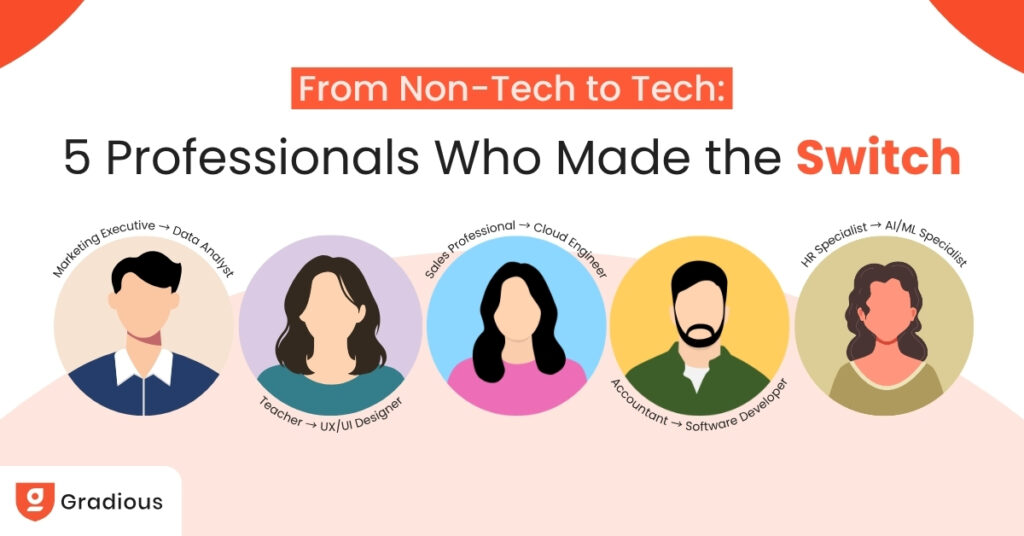
From Non-Tech to Tech: 5 Professionals Who Made the Switch Currently, career transitions from non-tech to tech have accelerated at an unprecedented pace. Professionals across industries are re-evaluating their career paths, driven by evolving market demands, digital transformation, and the promise of higher growth opportunities. At the same time, the tech industry continues to expand rapidly, creating a strong demand for skilled professionals. However, contrary to popular belief, you don’t always need a technical degree to enter this space. In fact, many individuals are successfully transitioning by leveraging their existing skills and complementing them with targeted learning. So, whether you are exploring new career opportunities, seeking better compensation, or aiming for long-term stability, the shift to tech offers a compelling pathway. In this blog, we will explore why professionals are making this switch, share real-life success stories, and provide a clear roadmap to help you get started. To begin with, let’s first understand what a non-tech-to-tech career switch really means. What is a Non-Tech to Tech Career Switch? A non-tech-to-tech career switch refers to transitioning from a non-technical background, such as marketing, HR, teaching, or sales, into tech roles like data analyst, software developer, UX designer, or cloud engineer. With structured learning and the right tools, professionals can make this shift within 3–6 months. More importantly, transferable skills combined with practical upskilling make this transition not only possible but highly achievable. Quick Overview: Non-Tech to Tech Career Switch 1) Who can switch? Anyone with basic problem-solving and learning ability 2) Best roles: Data Analyst, QA Tester, UX Designer, Cloud Engineer 3) Skills needed: Excel, SQL, Python, Testing Tools, Design Tools 4) Time required: 3–6 months (with consistent effort) 5) Salary potential: 30–100% increase depending on role Why Professionals Are Switching from Non-Tech to Tech High Demand and Lucrative Opportunities Organizations across industries are digitizing operations, which naturally increases the need for skilled talent. As a result, roles such as data analysts, cloud engineers, and developers are not only abundant but also highly compensated. Moreover, many of these roles offer global opportunities, allowing professionals to work with international teams and clients. Flexible Learning Pathways Unlike traditional career paths, transitioning into tech no longer requires a full-time degree. Instead, professionals can leverage online courses, bootcamps, and certification programs to build relevant skills. Additionally, self-paced learning makes it easier for working professionals to upskill without disrupting their current responsibilities. Long-Term Career Growth Equally important, the tech industry offers strong long-term growth. As technologies evolve, professionals can continuously upgrade their skills and move into advanced roles such as AI specialists, data scientists, or solution architects. 5 Inspiring Stories of Non-Tech to Tech Career Switch Real-world examples not only inspire but also make the transition feel achievable. In fact, these stories demonstrate that with the right mindset, structured learning, and consistency, professionals from any background can successfully move into tech roles. Marketing Executive to Data Analyst Rahul started his career as a marketing executive, where he focused on campaign planning, customer segmentation, and performance tracking. Over time, he noticed that data was becoming the backbone of marketing decisions. However, he lacked the technical expertise to fully leverage it. Recognizing this gap, Rahul started learning Excel for data handling, followed by SQL for querying databases. He then moved on to data visualization tools like Power BI to present insights effectively. Initially, balancing work and learning was challenging, but he dedicated a few hours daily to consistent practice. Within six months, Rahul built multiple projects, including campaign performance dashboards and customer behavior analysis reports. These projects became a strong addition to his portfolio. Eventually, he secured a data analyst role where he now works closely with marketing and product teams to drive data-backed strategies. Key takeaway: If you are already working with data in any capacity, formalizing your analytical skills can significantly accelerate your transition into tech. Teacher to UX/UI Designer Anjali spent several years as a school teacher, where she developed strong communication, empathy, and problem-solving skills. While exploring new career options, she came across UX/UI design and realized that understanding user behavior is at the core of both teaching and design. She began by learning design fundamentals, including user research, wireframing, and prototyping. Tools like Figma and Adobe XD helped her translate ideas into visual interfaces. Additionally, she studied design thinking principles to better understand user-centric problem-solving. To gain practical experience, Anjali worked on mock projects such as redesigning educational apps and improving user flows for learning platforms. She also sought feedback from design communities, which helped refine her work. After building a strong portfolio, she transitioned into a UX designer role at a digital product company. Key takeaway: Careers that involve understanding people, like teaching, provide a strong foundation for UX roles. Accountant to Software Developer Arjun, an accountant by profession, had minimal exposure to programming. However, his daily work involved handling financial data, identifying discrepancies, and applying logical reasoning skills that are highly relevant in software development. Motivated to explore new opportunities, Arjun started learning Python through beginner-friendly resources. Initially, coding concepts felt overwhelming, but he persisted by practicing small programs daily. Gradually, he progressed to web development, learning HTML, CSS, and JavaScript. He built simple applications such as expense trackers and financial calculators, which aligned with his domain expertise. Over time, these projects demonstrated both his technical skills and domain knowledge. With consistent effort and portfolio building, Arjun secured a role as a junior software developer. Key takeaway: Logical thinking and problem-solving skills can make learning programming significantly easier. Sales Professional to Cloud Engineer Meena worked in sales, where she regularly interacted with CRM platforms and cloud-based tools. While she wasn’t directly involved in technical implementation, her curiosity about how these systems functioned sparked her interest in cloud computing. She began her journey by learning the fundamentals of cloud platforms such as AWS and Azure. Certifications played a key role in validating her knowledge, while hands-on labs helped her understand real-world applications. Despite having no prior technical background, her familiarity with
Step-by-Step Roadmap for Tech Careers
Step-by-Step Roadmap for Tech Careers If you’re looking for a roadmap for tech careers, breaking into the competitive tech industry can feel overwhelming, especially when each role demands a diverse skill set. Without a clear plan, it’s hard to land your dream job. A well-structured roadmap for tech careers eliminates this confusion. It acts as your strategic guide, helping you build relevant skills, stay consistent, and progress efficiently. Whether you are a beginner exploring opportunities or a professional planning a transition, following a well-defined tech learning path can significantly accelerate your growth. In this blog, we will explore three of the most in-demand domains: Each section provides a step-by-step approach to help you navigate your journey effectively. Along the way, we will also highlight practical resources and learning strategies to keep you on track. Full-Stack Development Roadmap Understanding Full-Stack Development Full-stack development refers to the ability to build both the front-end (user interface) and back-end (server-side logic) of a web application. A full-stack developer works across the entire development cycle, from designing user interfaces to managing databases and APIs. Because of this versatility, full-stack developers are highly valued in modern tech teams. They combine creativity and problem-solving to deliver complete end-to-end solutions. Step-by-Step Learning Path Step 1: Basics of HTML, CSS, and JavaScript To begin with, you need to learn the foundational technologies of the web: In addition, understanding how the web works, such as HTTP, browsers, and DNS, will strengthen your fundamentals. For authoritative documentation, refer to MDN Web Docs Step 2: Front-End Frameworks Once you are acquainted with JavaScript, the next step is learning modern front-end frameworks such as: These tools allow you to build dynamic, responsive, and scalable user interfaces. Moreover, they are widely used in real-world applications, making them essential for career growth. Step 3: Back-End Development After mastering the front-end, focus on back-end technologies: At this stage, you will learn how to build APIs, handle server logic, and manage user authentication. This step connects your front-end interface with data processing systems. Step 4: Database Management Next, learn how to store and retrieve data efficiently: Understanding database design and queries is critical for building scalable applications. Step 5: Deployment & Version Control Finally, learn how to deploy applications and manage code: These skills ensure your applications are production-ready and maintainable. To fast-track your journey, explore Full-stack Development courses Data Science Roadmap Understanding Data Science Data science focuses on extracting meaningful insights from data to support decision-making. It combines programming, statistics, and machine learning to solve complex problems. While both roles work with data: This field is ideal for those who enjoy working with data, patterns, and analytical thinking. Step-by-Step Learning Path Step 1: Basics of Python/R, Statistics, and Data Handling Start with programming and mathematical foundations: Also, learn data cleaning and preprocessing, as real-world data is often unstructured. Step 2: Data Visualization Next, focus on presenting insights effectively: Visualization helps translate complex data into clear, actionable insights. Step 3: Machine Learning Algorithms After understanding data, move to machine learning: Libraries like Scikit-learn simplify implementation and experimentation. Step 4: Advanced Topics After building a strong foundation, explore advanced areas: These skills open opportunities in AI-driven roles. Step 5: Deployment & Portfolio Building Finally, focus on applying your knowledge: You can also practice on Kaggle Tutorials to strengthen your skills. To get structured guidance, explore Data Science training programs. Cloud Computing Roadmap Understanding Cloud Computing Cloud computing enables businesses to store data, run applications, and scale infrastructure over the internet. It has become a core part of modern IT systems. Major platforms include: As companies extensively adopt cloud technologies, the demand for cloud professionals continues to grow in the IT industry. Step-by-Step Learning Path Step 1: Learn Cloud Fundamentals Begin by understanding key concepts: These fundamentals help you understand how cloud systems function. Step 2: Pick a Platform Next, choose a platform to specialize in: Focusing on one platform initially makes learning more effective. Step 3: Understand Cloud Architecture and Storage Learn core services such as: This step is essential for designing scalable and reliable applications. Step 4: Practice DevOps Tools and Automation To advance further, learn: These tools help automate deployment and improve efficiency. Step 5: Certification & Real-World Projects Finally, validate your skills through certifications: You can explore AWS Training & Certification For hands-on learning, check out career-ready tech programs at Gradious Benefits Following of a Tech Roadmap Following a structured roadmap for tech careers offers several advantages. A roadmap helps you focus on essential skills, enabling quicker and more efficient learning. It provides a clear sequence, making it easier to track your growth and stay motivated. Structured learning aligns your skills with industry requirements, improving employability. Instead of jumping between random resources, a roadmap gives you direction and clarity. By emphasizing hands-on projects, it ensures you gain real-world experience. As you progress step by step, your confidence grows, keeping you motivated. A roadmap allows you to combine skills across fields, such as integrating cloud with full-stack or data science. Conclusion Building a successful career in the IT domain requires more than just learning; it requires direction. A structured roadmap for tech careers helps you stay focused, avoid confusion, and achieve your goals efficiently. Whether you choose full-stack development, data science, or cloud computing, the key is to follow a step-by-step approach, practice consistently, and build real-world projects. In the long run, this structured path will not only improve your skills but also position you for long-term success in the tech industry. Start your journey today! Explore our courses and roadmaps for tech careers and achieve your dream role in full-stack, data science, or cloud computing. Visit: https://gradious.com/ FAQs 1. How long does it take to complete a roadmap for tech careers? It typically takes 6 months to 2 years, depending on your consistency and learning pace. 2. Which roadmap should I choose first? The choice is yours. Choose based on your interest: Full-stack development for building applications Data science for working with data Cloud
Freshers Hiring Trends India 2026: What Companies Really Expect
Freshers Hiring Trends India 2026: What Companies Really Expect Are you truly job-ready for 2026 or just degree-ready in today’s Freshers Hiring Trends India landscape? That’s the question many graduates should be asking today. The hiring landscape in India has evolved significantly, and companies are no longer evaluating candidates based only on degrees or academic scores. Employers increasingly look for candidates who can demonstrate practical skills, solve real problems, and adapt to modern workplace environments. If you are planning to build a successful career, it is important to understand how Freshers Hiring Trends India 2026 are reshaping recruitment strategies across industries. From fast-growing technology startups to global enterprises, organizations are gradually shifting toward skill-based hiring practices and performance-oriented selection processes. So, what exactly are employers expecting from fresh graduates in 2026? More importantly, how can you align your preparation with current hiring trends to stand out from the competition? Let’s explore the key developments shaping fresher hiring in India. What’s new in Freshers Hiring Trends India 2026? Companies are still hiring fresh graduates in 2026, but their recruitment strategies are becoming more structured and selective. Instead of large-scale hiring with minimal screening, many organizations now rely on structured hiring processes to identify candidates who can contribute effectively from the beginning. Shift to Skill-based Hiring Earlier, recruiters often filtered candidates based on degree, college reputation, or academic marks. While these factors may still play a role in initial screening, companies increasingly prioritize demonstrated competencies and practical job-ready skills. Skills employers commonly expect include: Competency-based recruitment is becoming more common. Many organizations now use coding assessments and technical challenges instead of relying only on resumes. Rise of Remote and Hybrid Freshers Roles Even though many organizations have resumed office operations, hybrid and flexible work models remain widely adopted. Because of this, fresh graduates are expected to perform effectively in distributed work environments. This usually involves: Adaptability to hybrid work environments has become an important workplace skill for new graduates. Diversity, Equity, and Inclusion (DEI) in Talent Strategy Many organizations are strengthening diversity, equity, and inclusion initiatives as part of their long-term workforce strategy. Companies are expanding hiring efforts across different regions, educational backgrounds, and demographics to build diverse teams. Tech and Digital Roles Continue to Lead Demand Technology-driven roles continue to dominate entry-level hiring demand in India. Common roles include: However, employers now expect more than theoretical knowledge. Practical portfolios, GitHub project portfolios, internships, hackathon participation, and project-based learning significantly strengthen a candidate’s profile. Data-driven Recruitment is Becoming More Common Another noticeable change in hiring practices is the increased use of data-driven recruitment tools. Many organizations now use Applicant Tracking Systems (ATS) and digital screening tools, reflecting the rise of modern recruitment technologies and hiring systems Top Skills Companies expect from Freshers Understanding the skills employers value can help graduates prepare more effectively for modern hiring processes. Some key skills include: Candidates who combine technical knowledge with effective communication skills often perform better in recruitment processes. Campus Placements Trends 2026 Campus recruitment practices are evolving rapidly. Many companies are shifting from large-scale bulk hiring toward structured and selective hiring approaches. The following comparison highlights how campus hiring patterns are changing. Indicator Traditional Pattern 2026 Trend Number of Offers Moderate bulk hiring More selective hiring based on skills Skills Focus Degree and academic scores Technical skills and practical knowledge Assessment Approach Written aptitude tests Coding assessments and project-based evaluation Employers Mostly IT services companies Product companies, startups, and tech-driven firms Evaluation Rounds One or two rounds Multiple structured evaluation rounds Screening Tools Manual resume screening Digital assessment platforms and ATS systems Internship Value Limited consideration Strong evaluation factor Project Assessment Rarely reviewed Detailed technical review of projects What this means for Freshers Bulk hiring is gradually reducing in many campus recruitment programs. Instead, companies are focusing more on skill alignment and job-ready candidate evaluation. Organizations now commonly: What Recruiters look for in Freshers Technical Knowledge Recruiters typically evaluate: Adaptability and Learning Mindset Recruiters value individuals who: This reflects the importance of a continuous learning mindset in today’s job market. Soft Skills Matter Too Recruiters commonly assess: Digital Awareness and AI Readiness Being comfortable with AI and digital tools is becoming a strong advantage. Freshers Demand in Tech Sector vs Other Sectors in Freshers Hiring Trends India 2026 Reports show strong demand in IT and digital roles, highlighting the importance of technology skills in the job market. Tech Sector Roles in software development, data analytics, cloud computing, artificial intelligence, and cybersecurity continue to dominate hiring demand. BFSI and Fintech Banks and financial institutions are investing heavily in digital platforms, data analytics, and cybersecurity infrastructure, creating opportunities for tech-enabled finance roles. E-commerce and Retail Technology Growth in digital commerce has increased demand for roles in operations analytics, logistics technology, and data-driven decision making. Healthcare Technology Digital health platforms, telemedicine, and healthcare analytics are creating new opportunities for graduates with technical and data skills. Digital Marketing and Operations Roles in performance marketing, SEO analytics, CRM management, and growth operations are also expanding. How Freshers Can Prepare for Freshers Hiring Trends India 2026 Why Understanding Freshers Hiring Trends India 2026 Matters Understanding Freshers Hiring Trends India 2026 allows candidates to prepare strategically for the job market. The modern job market is increasingly performance-driven rather than purely degree-driven. Candidates who demonstrate strong skills, practical experience, and adaptability are more likely to succeed. Conclusion For freshers, the path forward is clear: focus on skill development, build real-world projects, gain practical exposure, and strengthen communication skills. Graduates who combine knowledge, skills, and industry-relevant experience will be best positioned to succeed in the competitive job market of 2026. FAQs 1. What are the biggest Freshers Hiring Trends India 2026? The biggest trends include skill-based hiring, coding and project-based assessments, hybrid work roles, and a stronger focus on practical technical skills and soft skills. 2. Is fresher demand in tech still strong in 2026? Yes. Roles in software development, AI/ML, cloud computing, data analytics, and cybersecurity continue to show strong demand
Product-Based Companies Preparation with Gradious Mock Tests
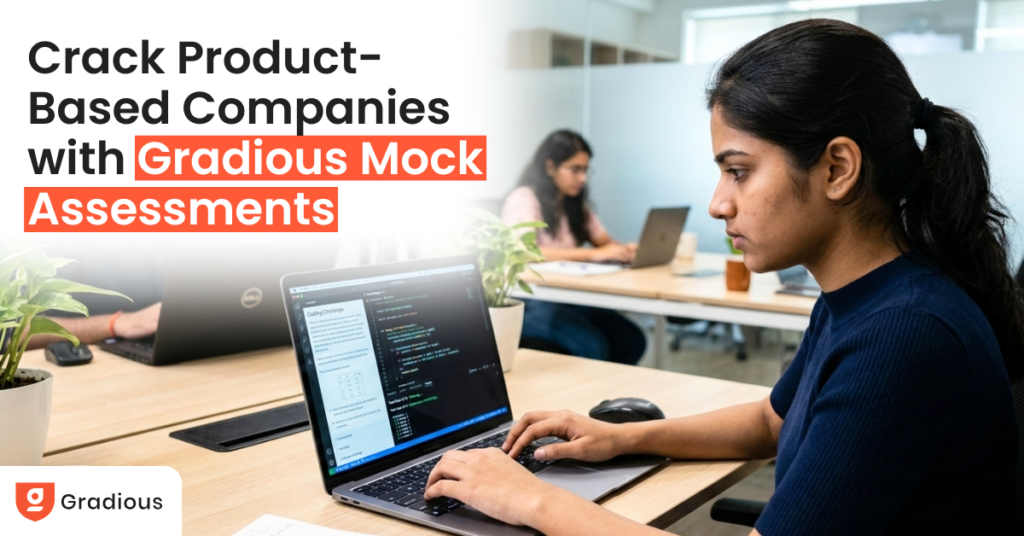
Product-Based Companies Preparation with Gradious Mock Tests Landing a role in a top product-based tech company is a goal for many software engineers. Product-Based Companies Preparation requires far more than knowing programming syntax or solving a few coding problems. The competition is intense, expectations are rigorous, and every round evaluates depth of understanding, problem-solving clarity, and coding efficiency. This is why product-based companies’ preparation must be structured, practical, and performance-oriented rather than purely theoretical. Gradious supports this preparation through its LEAP LMS learning platform and online assessment platform, designed to help students and aspiring engineers practice coding, track progress, and prepare for real interview scenarios. With structured learning paths, coding mock tests, AI-assisted evaluation, and real-time performance analytics, Gradious helps transform preparation into measurable improvement.For students preparing for leading product companies and MAANG interview preparation, a structured EdTech platform, coding platform, and LMS for engineering colleges can significantly improve readiness and confidence. Why Product-based Companies’ Preparation for Interviews is Different from Service-based Jobs The preparation strategy for product-based companies is fundamentally different from that of service-based roles. While service-based companies often evaluate basic programming proficiency and communication skills, product-based companies typically assess deeper technical competence and strong problem-solving ability. Strong Emphasis on DSA Interview Questions Product-based companies place strong emphasis on DSA interview questions because they reveal how well a candidate understands core computer science concepts. It is not enough to arrive at the correct answer; candidates must present optimized solutions and explain their logic clearly. Interviewers often evaluate time complexity, space efficiency, edge-case handling, and the reasoning behind the solution. Advanced Problem-solving Skills Writing functional code is only the starting point. Successful candidates demonstrate the ability to break down complex problems, recognize patterns, and reason through constraints logically. Interviewers evaluate analytical thinking throughout the process, from understanding the problem statement to designing and refining the final solution. Multiple Coding Rounds Product-based hiring processes usually include multiple technical rounds that increase in difficulty. Most of these rounds are timed, requiring candidates to maintain both speed and accuracy. Without regular coding mock tests and company-specific interview practice, performing effectively under such pressure becomes difficult. System Design for Advanced Roles For mid-level and senior roles, system design discussions are often part of the interview process. Candidates may be asked to design scalable systems, discuss architectural trade-offs, and justify their technical decisions. This requires both conceptual understanding and structured thinking. Therefore, product-based companies’ preparation must combine strong fundamentals, real interview simulations, continuous assessment, and hands-on coding practice. Common Challenges Candidates face in Product-based Companies: Preparation for Interviews Even talented candidates face several obstacles while preparing for product-based company interviews. Lack of a Structured Roadmap Many candidates jump between topics without a clear plan. As a result, core fundamentals remain weak, and advanced topics become difficult to grasp. No Real-time Coding Mock Tests Practicing without time constraints often creates a false sense of readiness. Real interviews are timed, making speed and efficiency critical. Inconsistent Practice Some candidates prepare intensively for short periods but fail to maintain consistent practice. Without regular problem-solving, improvement becomes slow. No Performance Analytics Without measurable data such as accuracy rates and coding speed, candidates struggle to identify weak areas and track progress effectively. Fear of Timed Assessments Candidates unfamiliar with live coding environments often feel anxious during technical assessments, which can impact performance. These challenges highlight the importance of a structured learning platform, coding platform, and online assessment platform that integrates learning, practice, and evaluation Why Mock Assessments are essential for Product-based Companies’ Preparation for Interviews Mock assessments help bridge the gap between theoretical knowledge and real interview performance. Improves Speed Regular timed practice helps candidates improve coding speed and decision-making. Reduces Anxiety Simulated interview environments make candidates familiar with real coding assessments, reducing pressure during actual interviews. Strengthens Logical Thinking Exposure to diverse DSA interview questions and company-specific interview patterns improves analytical thinking and problem-solving ability. Builds Confidence Consistent performance tracking helps candidates see their progress, which strengthens confidence before actual interviews. Therefore, mock assessments convert preparation from passive learning into active performance training. How Gradious Mock Assessments aid in the Product-based Companies Preparation process Gradious Technologies addresses these challenges through its LEAP LMS learning platform and AI-enabled assessment platform. The platform integrates structured learning modules, coding labs, mock assessments, and analytics within one unified EdTech platform. Real Interview-level Coding Mock Tests Gradious provides timed coding mock tests designed to simulate real technical interview environments. Features include: Company-specific interview question patternsMulti-round coding simulationsReal-time coding interfaceTimed technical assessments These simulations help candidates become comfortable with real interview pressure and improve performance during actual coding rounds.In addition, the LEAP LMS learning management system supports multiple assessment formats, coding challenges, and technical evaluations, providing exposure to real-world problem-solving scenarios. Structured DSA Learning Path Instead of random practice, Gradious offers a guided DSA preparation roadmap. Topic-wise DSA interview questions Beginner-to-advanced learning progressionConcept reinforcement modules Students build strong fundamentals first and then move toward advanced topics such as trees, graphs, and dynamic programming. Interactive coding labs within the Gradious learning platform provide hands-on practice, helping students apply concepts effectively. Performance Analytics Dashboard Gradious provides a data-driven analytics dashboard that tracks: Accuracy percentage Coding speed improvementTopic-wise performance insightsPeer comparison rankings This structured evaluation approach helps candidates identify improvement areas quickly. The AI-assisted analytics system analyzes coding submissions and provides insights that help candidates refine their preparation strategies. AI-assisted Evaluation System Another key feature of the Gradious platform is its AI-assisted evaluation system. Instant feedback after assessments Automated code analysis for correctness and efficiencyPeer-based performance rankingProctored assessments to maintain integrity These features help candidates improve after every test and ensure preparation remains continuous and measurable. Traditional Preparation vs Gradious Mock Assessments Feature Self-Preparation Gradious Platform Structured Roadmap No Yes Real Coding Mock Tests No Yes Performance Analytics No Yes Interview Simulation No Yes Placement Tracking No Yes Company-Specific Interview Practice No Yes Traditional preparation often lacks structure and measurable progress. Gradious combines structured learning modules, coding laboratories, analytics dashboards, AI-assisted evaluation, and interview simulations within
How to Crack MAANG Interviews: A Structured Learning Approach Using LMS, DSA, and System Design
How to Crack MAANG Interviews: A Structured Learning Approach Using LMS, DSA, and System Design Introduction How to Crack MAANG Interviews is one of the most searched topics among aspiring software engineers and fresh graduates. MAANG companies Meta, Apple, Amazon, Netflix, and Google are known for their highly structured and skill-intensive interview processes. These interviews evaluate not just coding ability, but also problem-solving depth, system thinking, and communication clarity. Random preparation methods rarely deliver consistent results. A structured learning approach using an LMS, combined with focused DSA and system design preparation, significantly improves interview readiness and performance. Why MAANG Interviews Are So Competitive MAANG interviews are intentionally designed to identify strong engineering fundamentals and long-term potential. Key reasons for their competitiveness include: Unstructured preparation such as ad-hoc practice or isolated tutorials fails because it lacks progression, assessment, and feedback loops. What MAANG Companies Really Look For MAANG companies assess candidates holistically rather than focusing on academic credentials alone. Core evaluation areas include: These competencies are consistently tested across software engineering interviews at MAANG. Role of DSA in MAANG Interviews Data Structures and Algorithms form the foundation of MAANG coding interviews. Key focus areas include: Regular and structured practice on a coding interview preparation platform helps candidates recognize patterns, improve problem-solving speed, and reduce errors under pressure. Why System Design Is a Game-Changer System design interviews evaluate a candidate’s ability to think like a real-world engineer. They focus on: While system design interviews for freshers are typically introductory, basic architectural clarity is increasingly expected even at entry-level roles. Why a Structured LMS-Based Approach Works Best A structured LMS-based approach replaces randomness with clarity and discipline. Compared to scattered resources, an LMS provides: This model aligns strongly with structured MAANG preparation using LMS and supports long-term consistency. How LMS Helps in MAANG Preparation An LMS built for MAANG preparation typically offers: This mirrors the structure of real software engineering interviews MAANG companies conduct. How Freshers Can Prepare Effectively Using LMS For fresh graduates, preparation often feels overwhelming without structure. An LMS enables: This makes MAANG interview preparation for freshers more focused, measurable, and realistic. How Gradious Enables MAANG-Focused Preparation Gradious supports aspirants through a disciplined, industry-aligned preparation framework that includes: This approach ensures preparation remains practical, structured, and outcome-driven. FAQs How long does it take to prepare for MAANG interviews? Preparation timelines vary, but most candidates require 4–8 months of consistent, structured practice depending on their starting level. Is DSA enough to crack MAANG interviews? DSA is essential but not sufficient. System design, code quality, and communication skills also play a significant role. Do freshers need system design for MAANG? Yes. While expectations are basic, freshers are increasingly evaluated on foundational system design concepts. Can LMS platforms really help crack MAANG interviews? LMS platforms provide structure, assessments, and progress tracking, which significantly improve preparation effectiveness when used consistently. Conclusion Cracking MAANG interviews is not about shortcuts or luck it is about structured preparation, continuous assessment, and focused learning. A disciplined approach using LMS-driven learning, strong DSA fundamentals, and system design preparation builds the depth, confidence, and consistency required to succeed in MAANG interviews. 👉 Start your MAANG preparation with a structured LMS-driven learning approach from Gradious.
Why LMS and Assessment Platforms are Critical for Placement Preparation in Colleges
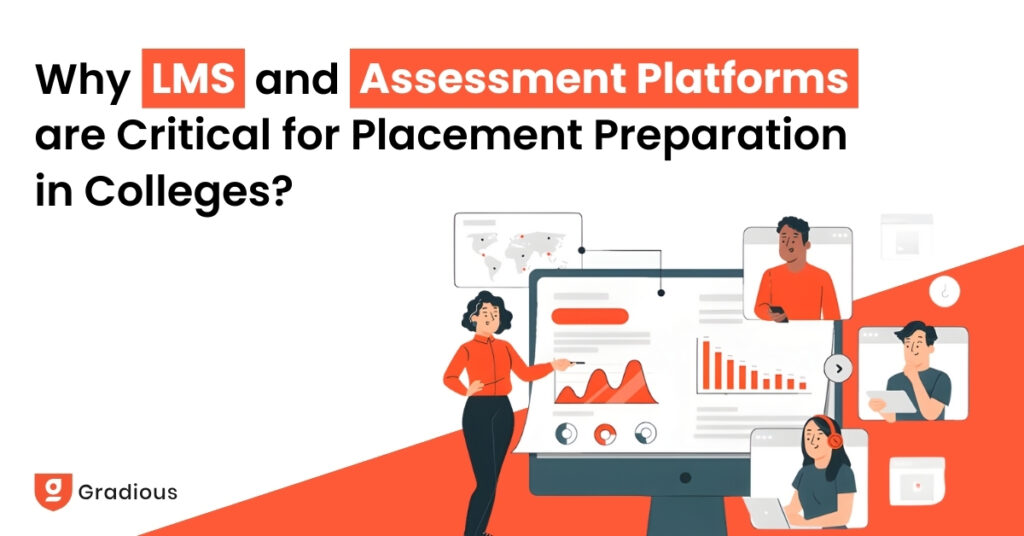
Why LMS and Assessment Platforms Are Critical for Placement Preparation in Colleges Introduction LMS for Placement Preparation have become essential infrastructure for colleges aiming to improve student employability and placement outcomes. As campus hiring shifts towards skill-based evaluation, institutions can no longer rely on classroom teaching and last-minute training alone. Recruiters now expect students to demonstrate practical skills, problem-solving ability, and assessment performance aligned with real hiring standards. To meet these expectations, colleges must adopt structured learning systems and measurable evaluation frameworks that prepare students consistently and at scale. The Reality of Campus Placements Today and the Need for LMS for Placement Preparation Campus placements have become increasingly competitive, particularly for engineering and technology students. Each year, the volume of graduates entering the job market grows, while recruiters raise expectations around job readiness. Key realities shaping placements today include: For effective placement readiness for engineering colleges, preparation must extend beyond theory to validated, job-relevant skill development. LMS for placement preparation of college An LMS for college placement preparation provides a centralized, structured learning environment that supports consistent skill development across batches. An effective LMS enables: By standardizing preparation and tracking progress, an LMS ensures students move beyond syllabus completion toward placement-oriented readiness. How LMS for Placement Preparation Supports Readiness A Learning Management System (LMS) acts as the backbone of modern placement preparation. It organizes content, tracks progress, and ensures students follow a structured learning journey aligned with industry hiring needs. LMS platforms support placement readiness by: When aligned with assessments, LMS platforms directly contribute to LMS and Assessment Platforms for Placement Preparation as a unified strategy rather than isolated tools. Why Assessment Platforms Matter in LMS for Placement Preparation An assessment platform for campus placements is critical because recruiters increasingly depend on evaluated skills instead of resumes or academic scores. Assessment platforms typically include: These online assessment tools for colleges help students experience real interview pressure while enabling colleges to measure readiness objectively. Why Assessments Matter in LMS for Placement Preparation Assessment platforms provide measurable proof of student capability. In a skill-driven hiring market, learning without validation is incomplete. Assessment-driven preparation allows: This data-driven approach strengthens skill-based hiring preparation for students and reduces uncertainty during placement season Why Placement Preparation Without Assessments Fails Placement preparation that relies only on learning content often creates false confidence. Without structured assessments: For sustainable placement readiness for engineering colleges, assessments must be integrated throughout the preparation cycle, not added at the end. LMS + Assessment Platforms: The Winning Combination The real impact comes from combining LMS learning with continuous assessments. This integrated approach enables a: Learn → Practice → Assess → Improve cycle, where: This model is the foundation of effective LMS and Assessment Platforms for Placement Preparation. How LMS and Assessments Help Colleges Improve Placement Outcomes Colleges that adopt integrated LMS and assessment platforms benefit from: Assessment data enables placement teams to intervene early and continuously improve preparation strategies. How Gradious Helps Colleges Build Placement-Ready Talent Gradious supports colleges through a structured, platform-driven approach that includes: This approach ensures institutions move from academic completion to measurable employability outcomes. Future of Placements: Skill-Based, Measured, and Platform-Driven Campus placements are rapidly evolving toward models that are: Colleges that adopt LMS and Assessment Platforms for Placement Preparation early will be better positioned to meet recruiter expectations and student career goals. FAQs 1. Why is LMS important for college placements? An LMS provides structured, scalable learning for technical, aptitude, and soft skills while enabling progress tracking and consistency across student batches. 2. Can placement preparation be done without assessments? Without assessments, students lack performance validation, and colleges cannot objectively measure readiness, reducing placement effectiveness. 3. How do assessment platforms help recruiters? Assessment platforms provide standardized, skill-based evaluation data that improves hiring accuracy and reduces recruitment risk. 4. What skills should colleges focus on for placements? Coding, problem-solving, aptitude, communication skills, and role-specific technical competencies aligned with industry requirements. Conclusion Colleges that combine structured learning with continuous evaluation don’t just prepare students—they make them employable. LMS and Assessment Platforms for Placement Preparation enable measurable skill development, early readiness identification, and stronger placement outcomes aligned with real hiring expectations. CTA 👉 Want to improve placement outcomes at your college? Discover how Gradious LMS and assessment solutions help institutions build placement-ready, industry-aligned talent at scale.
Traditional Hiring vs Skill-Based Hiring: What Works Better for Enterprises?
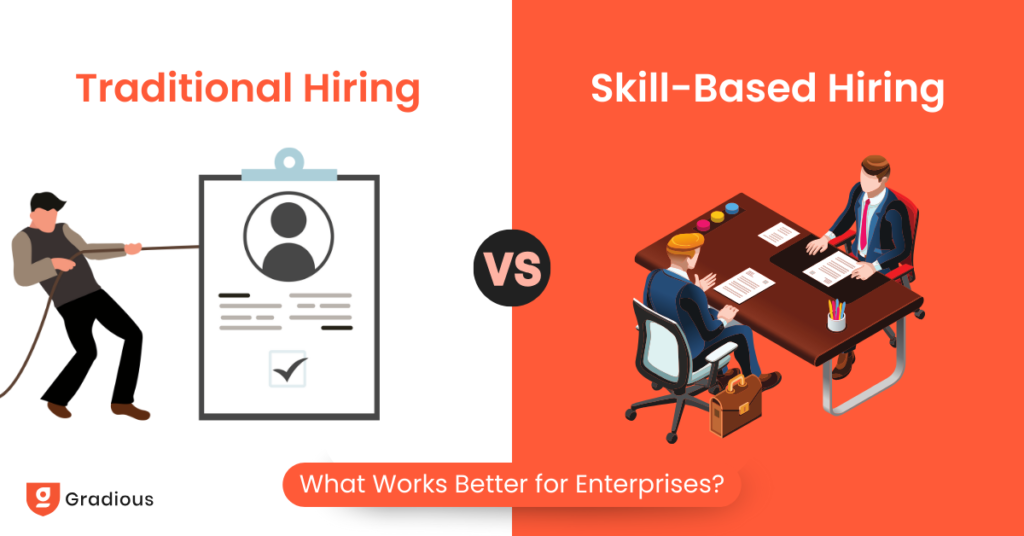
Traditional Hiring vs Skill-Based Hiring: What Works Better for Enterprises? Introduction Skill-Based Hiring for Enterprises is reshaping how organizations build, scale, and sustain high-performing teams. For decades, enterprises relied on traditional hiring models that emphasized degrees, resumes, and years of experience. While this approach worked in relatively stable job markets, it is increasingly ineffective in today’s technology-driven and rapidly evolving business landscape. Enterprises now face pressure to hire faster, reduce workforce risk, and ensure employees deliver value from day one. With continuous advancements in software engineering, Enterprise AI, cloud platforms, data engineering, and intelligent automation, job roles evolve faster than academic curricula or static experience benchmarks. This shift has accelerated the move from credential-based hiring to skill-based hiring supported by corporate training and workforce upskilling. In this blog, we compare traditional hiring vs skill-based hiring, explain why enterprises are adopting training-led talent strategies, and outline which approach delivers stronger long-term business outcomes. What Is Traditional Hiring? Traditional hiring is the most commonly used recruitment approach across enterprises. It evaluates candidates primarily on educational qualifications, resumes, job titles, and previous work experience. Focus on Degrees, Resumes, and Experience In traditional hiring: While familiar, this approach does not reliably predict on-the-job performance—particularly in technical, AI-driven, or rapidly evolving digital roles. Long Hiring Cycles and Higher Onboarding Effort Traditional hiring often leads to: Even after hiring, enterprises frequently invest significant time and resources in onboarding before employees reach expected productivity, increasing total cost of hiring. What Is Skill-Based Hiring? Skill-based hiring evaluates candidates based on verified, job-relevant skills rather than formal credentials alone. The focus shifts from what candidates claim on paper to what they can demonstrably perform. Hiring Based on Verified Skills and Assessments In skill-based hiring: This approach improves alignment between role expectations and employee capability. Emphasis on Job Readiness and Performance Skill-based hiring prioritizes: For enterprises adopting AI in business operations or intelligent automation, this model offers greater predictability and measurable outcomes. Traditional Hiring vs Skill-Based Hiring Factor Traditional Hiring Skill-Based Hiring Hiring Speed Slow, multi-stage Faster, assessment-driven Risk Higher mismatch risk Lower performance risk Productivity Longer ramp-up time Faster job readiness Cost Higher long-term costs Optimized hiring ROI Talent Pool Credential-limited Broader, skill-diverse Hiring Speed Skill-based hiring reduces time-to-hire by emphasizing role-specific assessments and skill validation over resume-heavy screening processes. Cost and Risk Traditional hiring often results in mismatches that increase attrition and re-hiring costs. Skill-based hiring lowers this risk by aligning candidate capability with job requirements upfront. Workforce Productivity Employees hired through skill-based, training-supported models typically reach effective productivity faster due to structured preparation and applied learning. Why Enterprises Are Moving to Software Skill Training B2B The shift toward software skill training B2B reflects broader changes in enterprise workforce requirements. Skill Gaps in Fast-Changing Tech Roles Technologies such as Enterprise AI, cloud infrastructure, cybersecurity, and data analytics evolve rapidly. Traditional education models struggle to keep pace, leading to: Need for Predictable Talent Performance Enterprises increasingly prioritize predictable outcomes. Skill-based hiring supported by structured training enables: Business-Aligned Workforce Development Software skill training B2B enables organizations to: Online Corporate Training for Software Teams Online corporate training for software teams is now a core component of modern enterprise talent strategies. Continuous Learning for Existing Employees Online training supports: Remote-Friendly and Scalable Digital training platforms allow enterprises to: Faster Adoption of New Technologies Structured online programs help teams adapt more quickly to: Role of Corporate Technical Training Programs Corporate technical training programs form the foundation of effective skill-based hiring strategies. Structured Learning Paths Enterprises benefit from: Industry-Aligned Curriculum Effective programs focus on: Real Project Exposure Hands-on project experience ensures: IT Certification Training for Employees IT certification training for employees plays an important role in standardizing and validating skills across enterprise teams. Why Certifications Matter for Enterprises Certifications provide: Improved Credibility and Compliance Certified employees help enterprises: Coding Bootcamp for Existing Professionals A coding bootcamp for existing professionals enables enterprises to upskill current teams rather than replace them. Upskilling Without Replacing Teams Bootcamps support: Faster Role Transitions Employees can: Hands-On, Job-Oriented Learning Bootcamps emphasize: Which Hiring Model Works Better for Enterprises? For modern enterprises, skill-based hiring consistently outperforms traditional hiring across key operational dimensions. Skill-Based Hiring Delivers Faster ROI Reduced ramp-up time and improved early productivity allow enterprises to realize value sooner. Training-Led Hiring Reduces Attrition Employees hired and developed through training-led models typically demonstrate: Ideal for Scaling Tech and AI Teams Skill-based hiring is particularly effective for: Conclusion Traditional hiring alone is no longer sufficient for enterprises navigating rapid technological and operational change. Skill-Based Hiring for Enterprises, supported by structured corporate training and workforce upskilling, delivers faster hiring, lower risk, and stronger business outcomes. By integrating software skill training B2B, online corporate training for software teams, and certification-backed learning, enterprises can build future-ready teams aligned with real-world business and AI capabilities. Ready to Shift to Skill-Based Hiring? Partner with Gradious to build enterprise-ready teams through training-led hiring and workforce upskilling.👉 Connect with our corporate training experts today FAQs 1. What is skill-based hiring for enterprises? Skill-based hiring for enterprises evaluates candidates based on verified, job-relevant skills rather than degrees or experience alone. 2. Why is skill-based hiring better than traditional hiring? It reduces hiring risk, improves productivity, shortens onboarding time, and aligns talent with real business needs. 3. Can skill-based hiring work for existing employees? Yes. Through corporate training, bootcamps, and certifications, enterprises can upskill existing teams effectively. 4. How do corporate training programs support skill-based hiring? They provide structured learning paths, hands-on projects, and standardized skill validation aligned with enterprise roles. 5. Why choose Gradious for skill-based hiring solutions? Gradious delivers industry-aligned corporate training, job-ready skill programs, and training-led hiring models designed for sustainable enterprise growth.
What Is the Train and Deploy Model? A Complete Guide for Employers
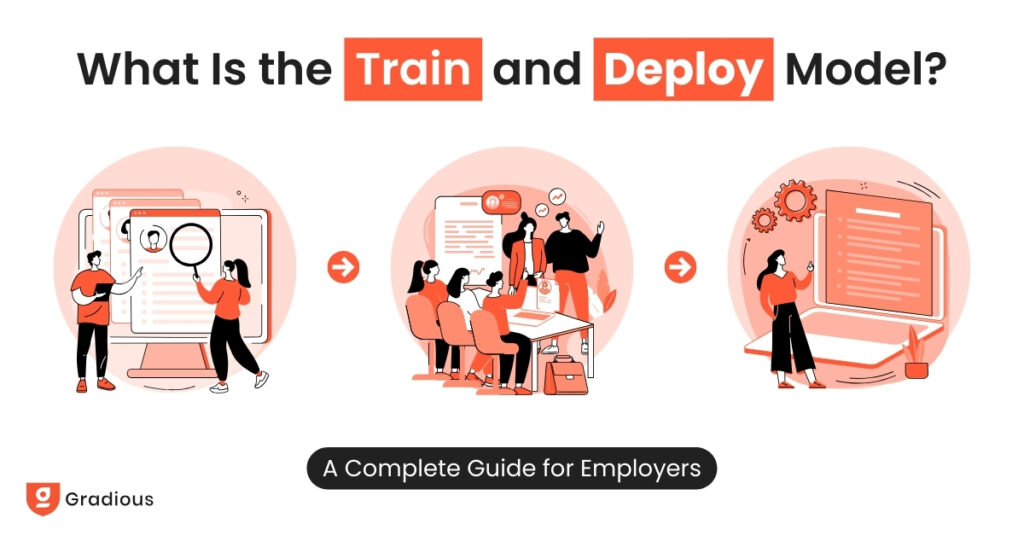
What Is the Train and Deploy Model? A Complete Guide for Employers Introduction Currently, the Train and Deploy Model for Employers & traditional hiring model can no longer keep up with modern business demands. Job roles evolve rapidly, and technologies shift overnight, yet truly job-ready talent remains in short supply. Therefore, employers are caught in a loop of longer hiring cycles, rising recruitment costs, and extended onboarding, with no guaranteed productivity outcomes. This is where the “Train and Deploy Model for Employers” changes the equation. Instead of chasing “ready-made” talent in the competitive market, organizations proactively build the exact skills their business demands. Talent is purposefully trained and deployed directly into live environments, ready to contribute from day one. As a result, employers gain faster productivity, better workforce alignment, and a more scalable talent pipeline. The growing Skills Gap: Why Employers are Rethinking Hiring The global workforce is undergoing a fundamental shift. Here are some of the major converging factors that are forcing employers to rethink how they hire and build talent. As a result, many companies are now turning to software skill training B2B models that prioritize capability building over credential chasing. These models focus on preparing talent specifically for organizational needs rather than relying solely on the external talent market. What is the Train and Deploy Model? The Train and Deploy model is a modern workforce strategy where talent is first trained on role-specific, job-aligned skills and then deployed into live business environments once they are ready to perform. Unlike traditional recruitment, this approach builds required skills before deployment. Employers collaborate with training partners to design curriculum aligned with actual job requirements, ensuring that talent is productive from day one. What truly sets the Train and Deploy model apart from traditional hiring is its shift in focus: Consequently, employers gain predictable talent outcomes, reduced hiring risk, and faster time-to-value. Common Myths about “Train and Deploy Model” Despite its growing adoption, several misconceptions still revolve around “Train and Deploy” approach. 1) One common myth is that “it’s only for freshers.” In reality, Train and Deploy works just as effectively for early-career professionals, mid-level talent, and employees undergoing reskilling or role transitions. 2) Another misconception is that “training delays productivity.” On the contrary, structured training enhances productivity by reducing on-the-job trial and error. 3) Also, many assume that “Train and Deploy is more expensive than hiring experienced talent.” However, when recruitment fees, prolonged onboarding, higher attrition, and delayed productivity are taken into account, Train and Deploy often delivers a stronger return on investment. How the Train and Deploy Model works: Step-by-Step Step 1: Identifying Business-critical Skill Requirements Firstly, employers start by identifying the business-critical skills required for both current and upcoming projects to ensure that the training efforts are grounded in real demand. This process involves: By doing so, organizations ensure that training investments are directly tied to measurable business needs rather than generic skill development. Step 2: Structured Software Training for Employees After clearly defining skill requirements, candidates will undergo structured software training. This phase emphasizes: Therefore, participants gain applied knowledge rather than theoretical knowledge. This significantly reduces post-deployment learning curves and builds confidence before entering live environments. Step 3: Deployment into Live Projects Following successful training, candidates are deployed directly into live projects or business roles where they can immediately contribute. At this stage: Since the training stimulates real-world working conditions, deployment feels like a seamless transition rather than a high-risk handoff. Employers benefit from faster results, while employees gain confidence through meaningful and hands-on contribution. Train and Deploy Model vs Traditional Hiring Model: Comparison Here is a quick comparison of why many employers are shifting toward skill-first hiring strategies over traditional talent sourcing. Factors Train and Deploy Traditional Hiring Productivity Faster and predictable Extended onboarding cycles Cost structure Optimized and scalable High and often unpredictable Skill relevance Directly job-aligned Dependent on market availability Talent scalability Highly scalable Limited by talent supply Retention Stronger engagement and stability Higher attrition risk Key Benefits of Train and Deploy Model for Employers Here are the key strategic advantages of adopting Train and Deploy model: How Gradious Technologies delivers Enterprise-grade Train and Deploy Programs Gradious partners with employers to design and execute Train and Deploy programs that are deeply aligned with real-world business needs. Rather than treating training as a standalone activity, Gradious integrates skill development directly into workforce planning. This ensures that talent is truly equipped to perform, not just certified. The approach is built around four core principles: Employer-centric program design Each initiative begins with a detailed understanding of role expectations, project requirements, and technology stacks. We ensure that our training curriculum is tailored to actual business scenarios. Industry-aligned instructors and mentors Our mentors bring practical and hands-on experience into the learning process. Their real-world perspective helps bridge the gap between theory and application. Job-ready skill validation Candidates are assessed via practical assignments, role-based evaluations, and performance benchmarks that mirror workplace expectations. This structured validation ensures only job-ready talent moves forward to deployment. Seamless deployment support We enable a smooth transition from training environments to live projects. This reduces onboarding friction, minimizes risk for employers, and helps deployed professionals integrate quickly into teams. Rather than offering one-size-fits-all programs, Gradious prioritizes relevance, readiness, and measurable results by delivering consistent value for employers. Custom Corporate Training Solutions by Gradious Technologies Acknowledging that no two organizations operate the same way, Gradious delivers custom corporate training solutions that are adaptable, scalable, and aligned with real-world business needs. Gradious training programs are tailored to match each organization’s roles, technologies, and growth objectives. Our solutions are built around: With Gradious, employers can customize training at every stage, accelerating productivity and bridging the learning and real-world performance gaps. AI Upskilling Program for Employees Here is why AI skills are crucial for modern businesses Proactive AI upskilling enables long-term competitiveness. It also helps businesses adapt faster, scale innovation, and build future-ready teams. How Gradious Technologies delivers AI-Ready Talent Gradious delivers AI upskilling programs for employees with a